
Food
Pravi Celer: The True Celery Transforming Modern Nutrition

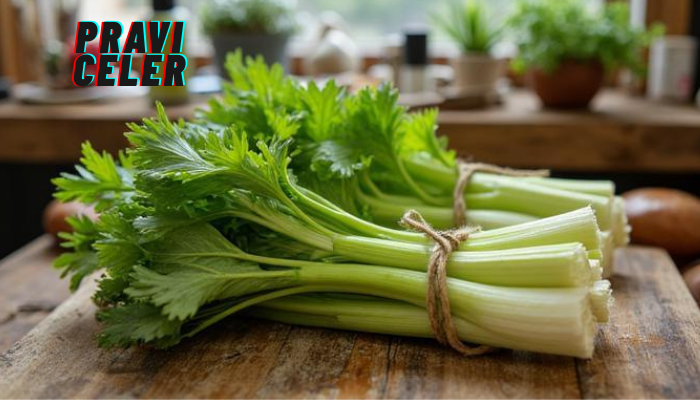
Introduction: The Celery You Thought You Knew
Most people have a complicated relationship with celery. It sits in the back of the fridge, half-forgotten, used as a garnish or a crunchy vehicle for peanut butter. It gets trimmed, blanched, and reduced to something mild and unremarkable. But what if that pale, watery stalk in your supermarket is only a shadow of what celery can truly be?
That is exactly the story behind pravi celer. In South Slavic languages, “pravi” means “true” or “real,” and “celer” simply means celery. Together, the phrase points to something far richer than the commercial produce most of us recognize: the whole, authentic celery plant, grown closer to its natural state, valued for its intense aroma, nutritional density, and centuries of cultural heritage. Once you understand what pravi celer really is, it becomes difficult to look at a grocery store bunch the same way again.
What Exactly Is Pravi Celer?
At its botanical core, pravi celer is Apium graveolens, a biennial plant belonging to the Apiaceae family, the same family as carrots, parsley, and fennel. The species name graveolens translates from Latin as “heavy-scented,” a reference to the distinctive, slightly peppery aroma that anyone who has crushed a fresh celery leaf will immediately recognize.
What sets Pravi Celer apart from the celery most people buy is not the species itself but the philosophy behind how it is grown and used. Modern commercial celery has been selectively bred over generations to produce long, pale, mild-tasting stalks that travel well, look uniform on supermarket shelves, and offend no one with too strong a flavor. That process of optimization has come at a cost: much of the aromatic intensity and nutritional richness has been quietly bred out along the way.
Pravi celer, by contrast, refers to the celery plant used in its fullest, most complete form. That means the firm, aromatic stalks, yes, but also the deep green leaves, the potent seeds that double as a spice, and, in many traditional uses, the root. The term emphasizes authenticity, purity, and originality, pointing toward celery in its most natural state rather than a processed or flavor-diluted substitute.
In the Balkans, Croatia, Serbia, Bosnia, and Bulgaria, pravi celer has never left the kitchen. It remains a staple ingredient in soups, stews, medicinal teas, and winter broths, passed down through generations of home cooks who understood intuitively that the whole plant offered far more than any trimmed, packaged version ever could.
A History Rooted in Ancient Tradition
The story of Pravi Celer stretches back well over three thousand years. Ancient Egyptians used wild celery for medicinal purposes, and it was found in the tomb of Pharaoh Tutankhamun. Greek and Roman civilisations used it as a flavouring, a medicine, and a symbol of mourning.
Hippocrates, widely regarded as the father of medicine, documented the plant’s digestive and calming properties in ancient texts. Greek athletes were given celery garlands as tokens of victory. Roman cooks used the seeds and leaves to flavor sauces. The plant carried real cultural weight, not just culinary utility.
The cultivated form we recognize today was developed in Italy during the 17th century, with selective breeding over centuries producing the milder, crunchier stalks now sold in markets worldwide. But in Central and Eastern Europe, the older relationship with the whole plant survived. In Slavic regions, including modern-day Croatia, Serbia, Bosnia, Bulgaria, and surrounding countries, people selected and preserved celery plants that possessed strong flavor and resilience in cooler climates. These heirloom varieties became known as pravi celer, distinguishing them from later commercial hybrids.
Families used it as a natural remedy for bloating, liver support, joint pain, and even anxiety. Traditional healers brewed celery leaf tea after heavy meals. Celery root is featured in winter broths and recovery soups. It was as common in Balkan kitchens as garlic or onions.
That deep cultural continuity is a major factor in Pravi Celer’s current relevance. It is not a trend invented by wellness influencers. It is a rediscovery of something that traditional communities never actually abandoned.
The Nutritional Profile: Small Calories, Big Returns
One of the most compelling aspects of pravi celer is just how much nutrition it delivers relative to its caloric content. The stalks are about 95 percent water, making a serving of celery one of the most hydrating foods available, yet the remaining five percent is packed with meaningful micronutrients.
Vitamin K is particularly noteworthy. It plays a critical role in blood clotting and bone density, and most people in modern diets consume well below the recommended daily amount. Celery provides a reliable, food-based source. Vitamin C supports immune function and skin health. Potassium helps regulate blood pressure and fluid balance. Folate is essential for cell repair and particularly important during pregnancy. Vitamin A, present especially in the leaves, supports eye health and immune response.
The leaves of pravi celer carry even higher concentrations of Vitamin C and calcium than the stalks. The root, or celeriac, adds extra fiber and minerals. When you eat the whole plant, you are getting a much wider range of nutrients than when you just snack on trimmed stalks.
The phytochemical content adds another layer of value. Celery leaves are rich in antioxidants and contain compounds such as apigenin, luteolin, and caffeic acid. Apigenin has been the subject of significant research for its potential anti-inflammatory and neuroprotective effects. Luteolin has shown promise in supporting cardiovascular health. Phthalides, another group of compounds found in celery, are linked to relaxation of arterial walls, which may help support healthy blood pressure levels.
None of these nutrients disappears in a single cooking method, but eating the plant as close to its whole, fresh form as possible preserves the widest range of these beneficial compounds.
Health Benefits Backed by Tradition and Science
Digestive Support
The fiber and high water content in pravi celer move food through your digestive tract smoothly. It reduces constipation, eases bloating, and feeds good gut bacteria. The plant also contains a type of soluble fiber that acts as a prebiotic, nourishing the beneficial microorganisms that keep the gut lining healthy and support immune function.
Cardiovascular Health
The phthalides in celery have been studied for their ability to relax the smooth muscle tissue lining blood vessels. When those muscles relax, blood flows more freely, and blood pressure tends to lower naturally. Athletes increasingly use celery-based drinks for natural rehydration because of the potassium-sodium electrolyte balance. That same balance supports heart rhythm and helps offset the effects of high dietary sodium.
Anti-Inflammatory Properties
Chronic inflammation sits at the root of many modern health conditions, from joint pain and skin disorders to metabolic disease. Loaded with antioxidants like flavonoids and vitamin C, pravi celer helps reduce inflammation and treat oxidative damage. Regular consumption of antioxidant-rich vegetables is one of the most consistently supported dietary strategies for long-term health.
Hydration and Weight Management
Because pravi celer is over 95 percent water and very low in calories, it contributes meaningfully to daily fluid intake without adding caloric load. For people managing their weight or trying to eat larger volumes of food for fewer calories, celery provides genuine bulk, crunch, and flavor without the nutritional trade-offs of processed snack foods.
Bone and Blood Health
Vitamin K is often overlooked in nutritional discussions, yet it is essential for proper calcium utilization in bones and for the cascade of proteins involved in blood clotting. Pravi celer, especially its leaves and root, provides a consistent dietary source of this undervalued vitamin.
How to Identify True Quality Pravi Celer
Not all celery sold in markets delivers what Pravi Celer promises. Strong, distinctive aroma is the first marker. Real celery has an unmistakable, slightly peppery, herbal scent. If it smells like almost nothing, it has likely been stored too long or grown in low-quality conditions. Firm, crisp stalks that snap cleanly indicate freshness. Deep green leaves that are bright rather than yellowing confirm that the plant has retained its peak nutritional density.
When buying celeriac (also called celery root), look for a dense, heavy ball with few hollow spots. A solid, firm root indicates a well-grown plant with good flavor concentration. Avoid roots that feel spongy or overly light for their size.
If you can access a farmers’ market, local producers who grow heirloom vegetable varieties are your best source. The difference in aroma and flavor between a freshly harvested Pravi celer plant and a supermarket bunch stored for two weeks is striking enough to be immediately convincing.
Growing Pravi Celer at Home
For those with garden space or even a large container, growing your own pravi celer is one of the most rewarding kitchen garden projects available. Pravi Celer is classified as a biennial plant in the Apiaceae family. At maturity, it typically reaches 60 to 90 centimeters tall. The stalks are ribbed, pale to medium green, and upright.
The plant prefers cool weather, making spring and autumn the ideal growing seasons. It needs consistently moist, nutrient-rich soil and benefits from partial shade during the hottest parts of summer. Watering deeply two to three times per week, more often during dry or warm spells, and mulching around the base help enormously by locking in moisture and regulating soil temperature.
Starting seeds indoors eight to ten weeks before the last frost gives plants a strong head start. Transplanting into the garden once nighttime temperatures are reliably above five degrees Celsius allows the plants to establish before the growing season accelerates.
The reward for this patience is a plant you can harvest progressively: outer stalks first, leaving the inner growth to continue developing. The leaves can be picked throughout the season, dried for cooking, or brewed fresh into herbal tea.
Culinary Uses: Cooking the Whole Plant
One of the great pleasures of working with Pravi Celer is learning to use the entire plant. Most home cooks in Western countries have only ever used the stalks. Discovering the culinary potential of the leaves, seeds, and roots opens up a genuinely new pantry.
The stalks work beautifully raw in salads, cut into sticks for dipping, or braised slowly in olive oil with garlic and white wine as a side dish. They form the aromatic base of countless soups and stocks alongside carrot and onion, the classic soffritto trio.
The leaves are more pungent than the stalks and hold up well in cooking. They can be added to soups in the final minutes, blended into herb sauces, dried and crumbled over roasted vegetables, or used fresh like flat-leaf parsley in a tabouleh-style salad.
The seeds carry a concentrated, slightly bitter celery flavor and work as a spice in coleslaw dressings, pickling brines, bread, and spice rubs for roasted meats. A pinch of celery seed transforms a simple vinaigrette into something with real depth.
The root variety celeriac produces a dense, nutty-flavored bulb that has long been prized in European cuisine. It can be roasted whole, mashed with butter and cream, grated raw into a remoulade, or sliced thin and baked into gratins. Its flavor is more complex and earthy than stalk celery, and it holds its texture through long cooking, making it ideal for winter braises.
Simple Daily Ways to Add Pravi Celer to Your Routine
You do not need elaborate recipes to benefit from pravi celer. A handful of fresh stalks and leaves blended into a morning smoothie with apple, cucumber, and ginger is one of the most hydrating and nutrient-dense ways to start the day. A simple celery-and-lemon-juice drink before meals has long been a traditional digestive remedy in Balkan households.
Adding celery leaves to homemade stocks, rather than discarding them immediately, doubles the aromatic complexity of the broth. Keeping a batch of celeriac wedges roasted with olive oil and herbs in the fridge gives you a ready side dish or salad base for the week. Steeping dried celery leaves in hot water for five minutes produces a calming, lightly herbal tea that supports digestion after a heavy meal.

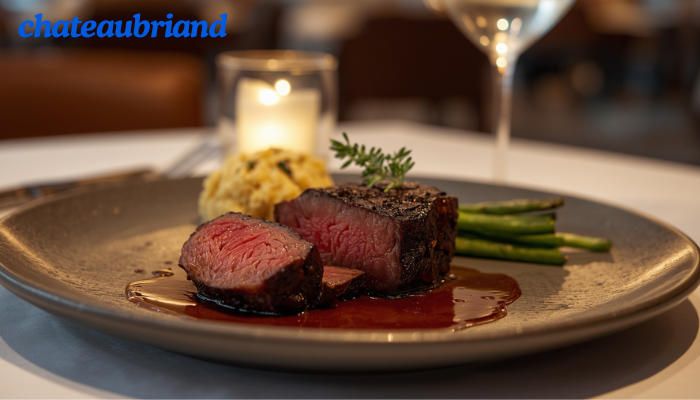
There are very few words in the culinary and literary world that carry quite as much weight as “Chateaubriand.” Say it in a fine dining restaurant, and a server will bring you one of the most prized cuts of beef on the menu. Say it in a French literature class, and the conversation shifts entirely, moving toward poetry, exile, Catholic faith, and the birth of Romanticism. The name belongs to both worlds with complete authority, which is part of what makes it so fascinating.
Whether you are a food lover trying to understand what makes this particular cut so special or a curious reader wanting to know more about the man behind the name, this guide covers it all. By the end, you will have a much clearer picture of why Chateaubriand, in every sense of the Word, continues to matter.
Who was François-René de Chateaubriand?
Born in Saint-Malo, Brittany, on September 4, 1768, François-René de Chateaubriand was a French writer, politician, diplomat, and historian who became one of the towering figures of the Romantic movement. He grew up in a noble family and spent much of his early childhood near the sea, a setting that left a permanent mark on his imagination and his prose.
He traveled to North America in 1791, spending time among Indigenous peoples and exploring landscapes that were entirely foreign to European readers at the time. Those experiences fed directly into his writing, giving his work a vividness and emotional depth that set him apart from contemporaries.
When the French Revolution erupted, Chateaubriand found himself navigating enormous personal and political upheaval. He fought briefly with the royalist armies, was wounded, and eventually fled to England, where he spent years in poverty but continued writing. Exile sharpened his thinking, and the longing for home, for beauty, and for spiritual meaning became recurring themes throughout his career.
His return to France and his subsequent works made him a literary celebrity. He served in various diplomatic roles, became a peer of France, and was never far from the center of political life. But it is his writing, not his politics, that secured his place in history.
Chateaubriand’s Literary Legacy
Atala and the Birth of French Romanticism
Published in 1801, “Atala” was a short novel set in the American wilderness that tells the story of two young lovers caught between passion, faith, and fate. The book was a sensation. Readers who had grown tired of cold Enlightenment rationalism responded to its lush descriptions of nature, its emotional intensity, and its tragic beauty.
“Atala” is widely considered one of the founding texts of French Romanticism. Chateaubriand did not simply describe nature as background scenery. He gave it emotional resonance, making the landscape reflect the inner lives of his characters in ways that would influence writers for generations.
The Genius of Christianity
A year after “Atala,” he published “Le Genie du Christianisme” (The Genius of Christianity), a sweeping defense of the Catholic faith. France had just emerged from a period of intense anti-clerical violence during the Revolution, and Chateaubriand argued that Christianity was not just spiritually true but aesthetically profound, the source of much of Europe’s greatest art, music, and literature.
Napoleon Bonaparte, who had just signed the Concordat reestablishing relations between France and the papacy, reportedly approved of the book. It resonated with a public eager to reconnect with tradition after years of chaos. Today, it is read as a landmark of religious and cultural writing.
Memoirs from Beyond the Grave
His most personal and perhaps greatest work is “Mémoires d’outre-tombe” (Mémoires from Beyond the Grave), a massive autobiography that he worked on for most of his adult life and instructed to be published only after his death. It is a book of extraordinary range, moving from childhood memories in Brittany to reflections on Napoleon, revolution, love affairs, and the march of time.
What makes the Memoirs so remarkable is the quality of the prose. Chateaubriand wrote French like no one before him, with a musicality and pictorial richness that raised the literary bar considerably. Victor Hugo, who was born the year after “Atala” was published, later said that he wanted to be Chateaubriand or nothing at all.
What Is the Chateaubriand Steak?
Now for the other kind of Chateaubriand, the one you can eat.
The Chateaubriand is a thick cut taken from the center of the beef tenderloin, specifically from the thickest part of the fillet. It is sometimes called the “heart of the tenderloin.” Because the tenderloin is a muscle that does very little work, it produces meat that is exceptionally lean, incredibly tender, and mild in flavor compared to cuts like ribeye or striploin.
A classic Chateaubriand is typically cut to serve two people, though some restaurants and home cooks prepare individual portions. Its thickness, usually around two inches or more, means it benefits from high-heat searing on the outside and a gentler finish in the oven to achieve the ideal internal temperature.
How Did the Steak Get Its Name?
The most widely accepted story is that Chateaubriand’s personal chef, a man named Montmireil, created the preparation for the writer sometime in the early nineteenth century. The dish was designed to impress, combining the finest cut of beef with a sauce made from a white wine and shallot reduction, finished with butter and herbs.
Some food historians have pushed back on this origin story, noting that the connection between the dish and the diplomat-writer is not perfectly documented. But the association stuck, and the name Chateaubriand became a byword for luxurious, special-occasion beef cookery.
How to Cook Chateaubriand Properly
Cooking a Chateaubriand well requires a bit of patience and the right technique. Here is the general approach used by most professional kitchens.
Start by bringing the meat to room temperature, which takes about thirty to forty-five minutes out of the refrigerator. Pat it completely dry with paper towels, then season generously with salt and freshly ground black pepper on all sides.
Heat a heavy oven-safe skillet, ideally cast iron, until it is very hot. Add a neutral oil with a high smoke point, then sear the tenderloin on all sides until a deep, golden-brown crust forms. This should take about two to three minutes per side.
Transfer the skillet to an oven preheated to around 400 degrees Fahrenheit (200 degrees Celsius) and roast until the internal temperature reaches your target. For medium-rare, the most commonly recommended doneness for this cut, aim for about 130 degrees Fahrenheit (54 degrees Celsius). Let the meat rest for at least ten minutes before slicing. Resting is not optional. It allows the juices to redistribute and keeps the meat from losing moisture the moment you cut into it.
The Classic Chateaubriand Sauce
The traditional accompaniment is a sauce Bearnaise or, in some preparations, a reduction sometimes called sauce Chateaubriand, made with white wine, tarragon, shallots, and butter. The richness of the sauce complements the tenderloin’s leanness beautifully. Simple roasted or sauteed vegetables are the preferred side, keeping the focus firmly on the beef.
Chateaubriand in Fine Dining Culture
The Chateaubriand steak has become synonymous with celebration and luxury. It appears regularly on special occasion menus, anniversary dinners, and holiday feasts. Part of its appeal is theatrical: a large, thick roast brought to the table and sliced tableside carries a sense of occasion that few other dishes can match.
In the steakhouse world, the quality of a Chateaubriand is often used as a benchmark for the kitchen’s skill and sourcing. A properly cooked Chateaubriand requires good beef, good technique, and a clear understanding of temperature and timing. There is nowhere to hide.
The Connection Between the Two Meanings
It is worth pausing on why a steak and a writer share a name, and what that says about the culture that produced both.
Chateaubriand, the man, lived and worked in a world where food, language, and social status were deeply intertwined. The French aristocracy and intellectual class dined well, hosted lavishly, and associated great cooking with great civilization. The idea that a celebrated chef would name a dish after a celebrated patron was not unusual; it was a form of tribute, a way of linking the pleasures of the table to the prestige of letters.
That the cut in question was the finest, most elegant portion of the tenderloin made the association feel natural. Something is fitting about the most refined cut of beef being named for one of the most refined writers of his era.
Why Chateaubriand Still Matters
Chateaubriand, the writer, is not as widely read today as he once was, at least outside France. But his influence runs through much of what we recognize as modern literature. His insistence on emotional authenticity, his rehabilitation of religious sentiment as an aesthetic category, and his treatment of nature as a mirror of human feeling are all ideas that became central to Romantic and post-Romantic writing.
In France, he is a canonical figure taught in schools and studied seriously by scholars. His prose style is considered a model of classical French writing, even as his themes were anything but conservative. He was a man of contradictions: a royalist who admired Napoleon’s energy, a devout Catholic with complicated love affairs, a defender of tradition who helped create something genuinely new in French literature.
Chateaubriand, the steak, meanwhile, is not going anywhere. As long as there are restaurants that value quality ingredients and classic technique, the tenderloin will be carved, rested, and served to people marking the moments of their lives that deserve something special.


Advent: The Season of Light, Hope, and Quiet Anticipation

Pravi Celer: The True Celery Transforming Modern Nutrition

Burt Thicke: The Name, the Myth, and the Real Family Story
-

 Fashion9 years ago
These ’90s fashion trends are making a comeback in 2017
-
Entertainment9 years ago
The final 6 ‘Game of Thrones’ episodes might feel like a full season
-
Fashion9 years ago
According to Dior Couture, this taboo fashion accessory is back
-
Entertainment9 years ago
The old and New Edition cast comes together to perform
-
Sports9 years ago
Phillies’ Aaron Altherr makes mind-boggling barehanded play
-
Business9 years ago
Uber and Lyft are finally available in all of New York State
-
Entertainment9 years ago
Disney’s live-action Aladdin finally finds its stars
-
Sports9 years ago
Steph Curry finally got the contract he deserves from the Warriors