
News
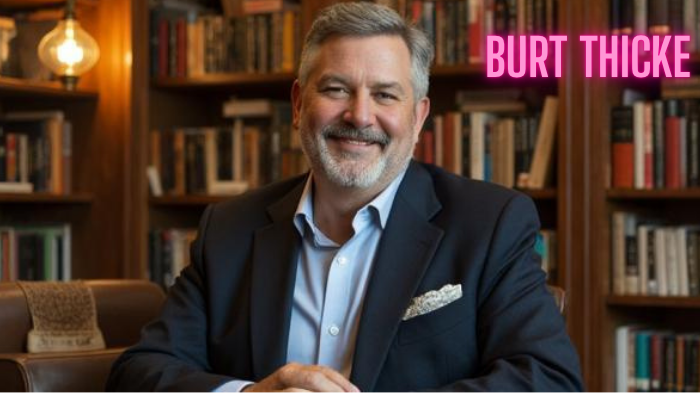
Burt Thicke: The Name, the Myth, and the Real Family Story
The Name That Launched a Thousand Searches
Type “Burt Thicke” into any search engine and you will find something interesting: dozens of results, a tangle of biographical claims, and a genuine mystery at the center of it all. Some articles describe a Canadian stockbroker and devoted family patriarch. Others hint at a viral internet meme. A few tell you directly that the name itself is something of a puzzle.
The truth is more layered and, as it turns out, far more interesting than a simple biography. The story of Burt Thicke is really three stories woven together: the origins of one of Canada’s most beloved entertainment families, the fascinating life of Alan Thicke, and a piece of internet culture that took on a life of its own. Understanding each thread separately makes the whole picture considerably clearer.
Who Is Burt Thicke, Really?
Let’s start with the most important clarification. “Burt Thicke” does not refer to a single, well-documented public figure. The name has circulated widely online, most often in discussions about Alan Thicke and his son, Robin Thicke. Still, it creates a degree of confusion that responsible writing needs to address directly.
Alan Thicke’s biological father was William Jeffrey, a Canadian stockbroker who lived in Kirkland Lake, Ontario, in the mid-twentieth century. His actual surname was Jeffrey, not Thicke. When Alan’s parents divorced in 1953, Alan was just six years old. His mother, Joan, later remarried a physician, Dr. Brian Thicke, and young Alan took his stepfather’s surname. That is how the famous “Thicke” name entered entertainment history.
The nickname “Burt” attached to William Jeffrey has spread widely across celebrity genealogy blogs and informal biography sites, but it lacks any verified documentary source. It appears to have moved organically from one low-authority page to the next, each one citing the last, until the name felt established. This is a textbook example of how internet misinformation travels: not through malice, but through repetition.
A separate meaning of “Burt Thicke” emerged in mid-2025 as a viral internet meme. The name blends Burt Reynolds and Alan Thicke into a single, humorous fictional identity, representing a creative “what if” scenario in which Reynolds replaces Thicke as a sitcom father figure. That meme spread quickly because it was built on genuine nostalgia for two iconic entertainment personalities from different corners of classic American and Canadian television culture.
So when people search for Burt Thicke, they are typically looking for one of three things: information about Alan Thicke’s family background, the story of the Thicke family dynasty, or details about the internet phenomenon that merged two famous names into one fictional persona. This article covers all three.
Alan Thicke: The Man at the Center of It All
To understand why so many people are curious about the Thicke family roots, you need to appreciate just how significant Alan Thicke was in North American popular culture.
Alan Willis Thicke was born Alan Willis Jeffrey on March 1, 1947, in Kirkland Lake, Ontario, Canada. He grew up in a household shaped by Canadian values of hard work, community, and self-reliance. His maternal grandmother, according to family accounts, played piano accompaniment for silent films, an early hint that creative instincts ran through the family. After his mother married Dr. Brian Thicke and the family relocated to Elliot Lake, Ontario, young Alan thrived academically and socially. He was bright enough to skip two school grades and was elected homecoming king by his classmates. He later attended the University of Western Ontario, where he studied English and Psychology and began developing the communication skills and natural charisma that would define his career.
Before Growing Pains, Thicke hosted a short-lived U.S. syndicated late-night talk show called Thicke of the Night, one of the first serious efforts to challenge NBC’s Tonight Show. He was also an accomplished songwriter, having composed the themes to Diff’rent Strokes and The Facts of Life, as well as several game shows.
These were not minor achievements. Theme songs for hit television programs represent genuine artistic and commercial contributions to popular culture, and Alan’s ability to work across multiple disciplines, acting, writing, composing, and hosting, sets him apart from performers who excelled in only one area.
Growing Pains and a Nation’s Living Room
The role that made Alan Thicke a household name across North America arrived in 1985 with the ABC sitcom Growing Pains.
It was that sitcom, which ran for seven seasons from 1985 to 1992, that made him a household name in the United States. He played psychiatrist Dr. Jason Seaver, who starts working from home and raising the children after his wife returns to work.
The premise was quietly progressive for its time. A father as the primary at-home parent, adapting his professional life around his family’s needs, was not the standard television father archetype of the 1980s. Alan brought genuine warmth, dry wit, and a kind of understated authority to the role, making Jason Seaver one of the most genuinely likable television fathers of his generation.
The show attracted serious talent. Leonardo DiCaprio had an early role as a homeless youngster taken in by the Seavers on Growing Pains. DiCaprio later said that Thicke “knew how to harness the power of the entertainment industry to be a positive influence in so many lives” and described him as someone who, when he walked into a room, was quite frankly the coolest person there.
Alan himself was characteristically modest about the character he built over seven seasons. He described Jason Seaver as a blend of his own values and the talented writing staff, noting that he brought what he called his “good old Canadian, northern Ontario backwoods values” to the character.
A Career That Refused to Stand Still
What set Alan Thicke apart from many actors associated with a single iconic role was his relentless creative output over decades. After Growing Pains concluded in 1992, he continued working steadily in television, film, and live entertainment, never disappearing from public view for long.
Thicke remained a consistent presence on TV in recent years with guest appearances on NBC’s This Is Us and Netflix’s Fuller House. He also starred on the Pop reality series Unusually Thicke, which focused on his personal life.
His self-deprecating humor and genuine approachability made him a favorite guest on talk shows and a reliable presence at charitable events, award ceremonies, and industry functions. He once referred to himself as “the affordable Shatner,” a joke that captured his awareness of his own place in the cultural landscape with exactly the kind of warm humor that made audiences love him.
His composing work also continued to earn recognition. The theme songs he had written in the late 1970s remained beloved pieces of television nostalgia, recognizable to generations of viewers who had grown up watching those programs.
Robin Thicke: The Legacy Continues
The Thicke family’s creative thread extended powerfully into the next generation.
Robin Alan Thicke was born on March 10, 1977. His parents are American actress-singer Gloria Loring and Canadian actor Alan Thicke. They divorced when Robin was seven years old.
Robin Thicke is best known for his 2013 single “Blurred Lines,” featuring T.I. and Pharrell Williams, which peaked at No. 1 on the Billboard Hot 100, received diamond certification from the RIAA, and remains one of the best-selling singles of all time.
Robin’s path into the music industry was shaped significantly by his father’s influence and example. Alan helped his son structure his earliest songs and, while initially cautious about the entertainment business given his own experience of its unpredictability, became one of Robin’s most vocal supporters as his son’s talent became undeniable.
Before pursuing his recording career, Robin produced and wrote songs for R&B singer Brian McKnight, who led the then-unknown singer to do the same for other R&B acts, including Brandy Norwood, Color Me Badd, Brownstone, and others. At the age of 16, he signed with Interscope Records.
The range of accomplishment across three generations of this family, from the structured financial discipline of William Jeffrey in Kirkland Lake, through Alan’s decades of television and composition, to Robin’s global chart success, represents a genuinely remarkable story of creative legacy.
The Viral Meme: Burt Reynolds Meets Alan Thicke
No complete discussion of “Burt Thicke” in 2025 and 2026 is possible without addressing the internet phenomenon that brought the name to a new generation of searchers.
The Burt Thicke meme began gaining traction in mid-2025, fueled by a growing interest in nostalgic content and creative fan edits. A viral Instagram post played a key role in introducing the concept to a wider audience, presenting Burt Thicke as a real television character, using familiar visual elements from classic sitcoms.
The concept works because it draws on two very distinct archetypes from classic entertainment. Burt Reynolds represented bold, swaggering, action-oriented masculinity, complete with his famous mustache and an easy confidence that made him one of Hollywood’s biggest stars through the late 1970s and 1980s. Alan Thicke, by contrast, embodied warm, thoughtful, domesticated fatherhood, the psychiatrist dad who listened carefully, offered measured advice, and kept the family together through gentle humor.
Combining those two personalities into a single fictional character is inherently funny because the contrast is so vivid. Imagining Burt Reynolds delivering Jason Seaver’s patient, psychologically informed parenting advice is an immediately legible comedic premise that requires almost no explanation.
The rapid rise of Burt Thicke can be explained by its strong connection to nostalgia and humor. The meme taps into memories of classic television while offering a fresh, unexpected twist. Its simplicity and clarity allow users to understand the concept within seconds, which is essential for viral content.
Alan Thicke’s Final Chapter
The end of Alan Thicke’s story was as characteristically warm and genuine as the life he had led.
He suffered a heart attack while playing hockey with his son, Carter. His older son, Robin Thicke, told the Los Angeles Times that some of his last words were a compliment to his son on a good shot.
He died on December 13, 2016, at the age of 69. He had been tweeting about Fuller House earlier that same day, cheerful and engaged with his work and his audience right up until the end.
Robin Thicke called his father “the greatest man I ever met” and “always a gentleman.” Carter Thicke tweeted that he had “lost my best friend and my idol.”
The tributes that poured in from across the entertainment industry painted a consistent portrait. Colleagues and co-stars described someone who was unfailingly kind, professionally reliable, and genuinely present with the people around him. That combination of personal decency and professional excellence is rarer than it should be, and the grief expressed at his passing reflected how much it was valued.
Why the Thicke Family Story Endures
The internet’s ongoing fascination with “Burt Thicke,” despite the name’s murky origins, speaks to something genuine about the family it represents.
People are drawn to stories of creative legacy, of values passed across generations and expressed differently in each one. William Jeffrey, the stockbroker from Kirkland Lake whose son took a different name and built a television career, provided a foundation of stability and discipline. Alan Thicke took that foundation and built something extraordinary on it, then supported his own son’s creativity with the same blend of practical caution and genuine encouragement.
Robin Thicke’s global success is the visible peak of that generational tower, but the stories below it matter. The grandmother who played piano for silent films. The small Ontario mining town where Alan grew up, understanding, perseverance, and the value of being genuinely likable.
Entertainment dynasties do not emerge from nowhere. They grow from households where certain values are modeled, and certain freedoms are permitted, where discipline and creativity are treated not as opposites but as partners.

That is the story behind the name “Burt Thicke,” regardless of the confusion that surrounds it.
News
YIFY: The Rise, Fall, and Legacy of a Streaming Giant
What Was YIFY and Why Did It Matter?
If you spent any time on the internet between 2011 and 2015, you likely encountered a name that became almost synonymous with free movie downloads: YIFY. For millions of film enthusiasts around the world, it was not just a website or a torrent release group. It was a cultural phenomenon, a technical marvel, and for the global entertainment industry, a serious problem.
YIFY, which later became known as YTS (short for YTS.ag or YTS.mx in its reincarnated forms), built a reputation that no other piracy group had quite managed before. Its secret weapon was elegant in its simplicity: beautifully compressed, high-definition movies delivered at file sizes so small that even users with slow internet connections could download a 1080p film in a matter of hours, sometimes minutes.
Understanding YIFY means understanding a particular moment in internet history, when streaming was still young, digital ownership felt clunky, and a generation of moviegoers wanted access to cinema on their own terms.
The Man Behind the Brand: Who Was YIFY?
The operation was the brainchild of a New Zealander named Yiftach Swery, a computer science student who went by the handle “YIFY,” a name derived from his own first name. He launched the project around 2010 and 2011, initially as a personal experiment in video compression. What started as a technical hobby quickly snowballed into something far larger than he ever anticipated.
Swery possessed a sharp eye for what movie fans actually wanted. At a time when most pirated films were either low-quality camera recordings or enormous, multi-gigabyte files that required a fast broadband connection and substantial hard drive space, he found a middle ground. Using encoding techniques built on the x264 codec, he compressed full-length feature films into files ranging from 700MB to 1.5GB without noticeable visual degradation for the average viewer.
It sounds like a minor technical achievement, but its impact was enormous. Suddenly, a two-hour Hollywood blockbuster could be downloaded in the same time it took to order a pizza.
The Science of Small: How YIFY Compressed Movies
To appreciate what made YIFY distinctive, it helps to understand a little about video encoding. Most HD video files are large because they carry an enormous amount of visual data: millions of pixels refreshed dozens of times per second. Reducing that file size without ruining the image requires sophisticated algorithms that decide which visual details the human eye will actually notice and which it will not.
YIFY mastered a particular configuration of the x264 encoder, tuning settings that most encoders ignored or left at default values. He carefully reduced bitrates, focusing compression on scenes with complex motion while preserving clarity in dialogue-heavy moments. The result was a file that looked genuinely impressive on a laptop screen or even a mid-sized television, despite being a fraction of the size of other HD releases.
This approach was not without tradeoffs. Trained eyes and home theater enthusiasts noticed reduced detail in dark scenes, softer textures, and occasional artifacts during fast-paced action sequences. But for casual viewers who wanted to watch a movie on a Friday night without waiting days for a download, it was close to perfect.
A Library That Rivaled Netflix
At its peak, the YIFY website hosted an extraordinary catalog. Thousands of movies were available, organized cleanly, tagged with accurate genre information, and accompanied by the original IMDB ratings. The interface was user-friendly in a way that many legitimate streaming services struggled to match at the time.
Netflix in 2012 and 2013 still had a heavily restricted international library. Users outside the United States found that entire genres, classic films, and recent releases were simply unavailable in their regions. YIFY had no such borders. A film student in Pakistan, a cinephile in Brazil, and a teenager in rural Australia all had access to the same library, available at the same quality, at the same time.
That global accessibility was one of the most powerful arguments that YIFY’s fans made in its defense. The platform, whether intentionally or not, exposed a massive gap in the legitimate market. People did not want to pirate movies out of malice toward filmmakers. They wanted to watch films, and the legal options were either too expensive, too restricted, or simply unavailable.
Record-Breaking Torrents and Cultural Reach
Some of YIFY’s releases became the most downloaded torrents in internet history. Films like “The Wolf of Wall Street,” “Interstellar,” and “The Avengers” generated millions of downloads each, numbers that drew serious attention from Hollywood studios and rights holders worldwide.
The Motion Picture Association of America (MPAA) ranked YIFY among the most damaging piracy operations worldwide. This was not simply hyperbole from an industry eager to protect its revenue. The sheer volume of downloads, combined with the clarity and convenience of the releases, meant that YIFY had genuinely disrupted the traditional distribution model in ways that earlier piracy groups had only partially managed.
At its height, the website reportedly attracted around 100 million visitors per month. For reference, that placed it ahead of many major news websites and entertainment portals. It was not a fringe operation. It was a mainstream one.
The Legal Hammer Falls
In 2015, the MPAA and several major studios filed a lawsuit against Yiftach Swery and the YIFY operation. Rather than fight the case in court, Swery settled. The terms included shutting down the YIFY website, ceasing all release activity, and paying damages estimated in the millions of dollars.
Swery issued a statement that was notably candid and free of the defiant bravado common in the piracy world. He acknowledged that copyright holders had legitimate grievances and expressed some degree of remorse. He was, by all accounts, not a hardened criminal but a young man who had built something that spiraled far beyond his original intentions.
The original YIFY operation went dark. But the story did not end there.
The YTS Reincarnation
Almost immediately after the YIFY shutdown, a new site appeared under the name YTS, carrying the same aesthetic, the same compression style, and an enormous catalog of films encoded in the YIFY tradition. The new operation was run by different individuals, leveraging YIFY’s brand recognition established over years of dominance.
The YTS brand has continued to operate in various forms across shifting domains, including YTS.ag, YTS.mx, and others. Copyright enforcement has pushed it from server to server and country to country, yet it has consistently reappeared. The site still attracts tens of millions of monthly visitors and maintains a catalog of thousands of films, all encoded according to the specifications YIFY made famous.
Whether this constitutes a tribute or an exploitation of Swery’s original vision depends largely on who you ask. The operator of the current YTS sites is not the same person who built the original. But the format, the philosophy, and the audience are unmistakably YIFY’s children.
What YIFY Taught the Streaming Industry
The legacy of YIFY is not solely about copyright infringement and legal battles. It is also a story about what consumers actually want and how industries can fail to provide it.
In the years since YIFY peaked, the legitimate streaming landscape has transformed almost beyond recognition. Netflix expanded globally, investing billions in local-language content to serve the very markets that YIFY once dominated by default. Disney+ launched with a comprehensive library that addressed years of fragmented licensing deals. HBO Max, Amazon Prime Video, Apple TV Plus, and dozens of regional platforms have collectively built a streaming ecosystem that, while imperfect, offers far more than the legal market of 2012 ever did.
Small file sizes are no longer the barrier they once were. Broadband speeds have risen dramatically worldwide, and mobile data has become cheaper and more accessible in many developing nations. The technical problem that YIFY solved brilliantly has, in some ways, been made obsolete by infrastructure improvements and competitive pricing.
Yet piracy persists, and YIFY’s brand persists with it. That persistence speaks to something the industry has still not fully solved: pricing, content fragmentation, simultaneous global release windows, and regional licensing restrictions continue to drive users toward unauthorized alternatives.
The Ethical Debate That Never Really Ended
Discussions about YIFY have always carried a complicated moral dimension. On one side, filmmakers, distributors, and studios argue correctly that every download represents a lost potential sale and that sustained piracy undermines the financial foundation of the creative industry.
On the other hand, fans and digital rights advocates point to the demonstrable gap between what legal platforms offered and what audiences needed. They argue that piracy is not simply theft but a market signal: a loud, clear message that the industry’s distribution model was broken.
Both arguments contain genuine truth. The film industry does deserve to profit from its creative work. Audiences do deserve access to global cinema without punishing price structures or arbitrary geographic restrictions. The tension between those two valid claims is exactly what YIFY stepped into, and exactly what the streaming revolution has been trying to resolve ever since.
YIFY’s Place in Internet History
Looking back from 2026, YIFY occupies a unique and somewhat paradoxical position in the history of digital media. It was a piracy operation, built in violation of copyright law, that directly contributed to financial losses for rights holders. It was also a technical achievement, a user experience benchmark, and a catalyst for change in an industry that had resisted adapting to the digital age.
Yiftach Swery was not a folk hero in any uncomplicated sense. He broke the law, reached a settlement, and moved on from the project he created. But the conversation that YIFY started, about access, affordability, global distribution, and the purpose of intellectual property law in a connected world, continues today in academic papers, courtrooms, policy discussions, and the business strategies of every major streaming platform.
Viewers loved the movies YIFY shared online. That much is beyond dispute. Whether the method of distribution was justified is a question the world is still working through, one new streaming service, one new copyright lawsuit, and one new file format at a time.
News
Lucipara Islands: Indonesia’s Last Wild Ocean Frontier
Indonesia is home to more ocean than almost any country on Earth, yet even within that vast blue expanse, a few places manage to feel genuinely off the map. The Lucipara Islands are one of those places. Scattered across the Banda Sea roughly 200 kilometers south of Ambon, these small, largely uninhabited islands sit so far from the nearest city that most Indonesians have never heard of them. For the scientists, divers, and conservationists who have made the long journey south, however, Lucipara is not just a destination. It is a revelation.
This article takes a close look at the Lucipara Islands: where they are, what makes them so ecologically remarkable, what it actually takes to get there, and why they are now at the center of a serious conservation effort that could define their future for generations.
Where Exactly Are the Lucipara Islands?
The Lucipara Islands, also known as Lousapara, Lucapin, or Lusipari Islands, and officially known in Indonesian as Kepulauan Lucipara, are part of the Maluku province of eastern Indonesia. Geographically, they sit at approximately 5.49 degrees south latitude and 127.54 degrees east longitude, placing them well within the Banda Sea and roughly 50 kilometers west of the Penyu Islands. To their north lies the Manipa Strait, separating them from the larger island of Seram.
The island group consists of several small landmasses, with Bingkudu and Kadola among the most frequently visited. The total land area is modest, but the surrounding marine territory is anything but. These islands are positioned at the convergence of powerful ocean currents, a hydrological fact that drives extraordinary levels of marine productivity and biodiversity. (more…)
News
Heidegger: Philosophy, Being, and the Question That Changed Everything
Introduction: A Thinker Who Asked the Oldest Question Anew
Some philosophers refine the ideas of those who came before them, while others tear up the entire foundation and ask us to start again. Martin Heidegger belongs firmly in the second category. More than almost any other thinker of the 20th century, Heidegger forced Western philosophy to reckon with a question it had been quietly sidestepping for centuries: what does it actually mean to be?
That question sounds almost childishly simple. But in Heidegger’s hands, it becomes one of the most demanding and rewarding inquiries in the history of human thought. His work has touched philosophy, literary theory, architecture, theology, cognitive science, and environmental ethics. It has inspired passionate disciples and fierce critics in equal measure. And it continues to generate debate, scholarship, and genuine intellectual excitement decades after his death.
This article introduces Heidegger’s life, his core ideas, and why his thinking remains so relevant to how we understand ourselves and the world we inhabit.
Who Was Martin Heidegger?
Martin Heidegger was born on September 26, 1889, in Messkirch, a small town in the Baden region of southwestern Germany. He grew up in a modest Catholic household and showed an early aptitude for scholarship. His intellectual formation was shaped by theology, classical philosophy, and the rich tradition of German idealism.
He studied at the University of Freiburg, where Edmund Husserl, the founder of phenomenology, influenced him. That encounter would prove decisive. Husserl’s method of investigating consciousness and lived experience gave Heidegger the philosophical tools he needed, even as he would eventually push far beyond what Husserl had intended.
Heidegger rose quickly through academic ranks. He became a professor at the University of Marburg before returning to Freiburg, where he eventually succeeded Husserl in the chair of philosophy. His reputation as a lecturer was extraordinary. Students traveled from across Europe and beyond to sit in his seminars, drawn by accounts of a thinker who could make the history of Western philosophy feel urgently alive.
His major work, “Being and Time,” was published in 1927 and immediately established him as one of the most significant philosophers of the age. The book was dense, technically demanding, and written in a language that Heidegger himself was partly inventing as he went. But its ambition was unmistakable: to reopen the question of Being that Heidegger believed had been forgotten since the ancient Greeks.
The Question of Being: Why It Matters
At the heart of everything Heidegger wrote is the question of Being, what he called the Seinsfrage. He argued that Western philosophy, since at least Plato and Aristotle, had made a fundamental error. Instead of investigating Being itself, what it means for anything to exist at all, philosophers had been studying beings: particular things that exist. They had replaced ontology with a kind of sophisticated catalogue of the world.
This might sound like a technical distinction, but its implications are enormous. Heidegger believed that our forgetting of the question of Being had shaped not just philosophy but the entire trajectory of Western civilization. The rise of modern technology, the dominance of instrumental rationality, the experience of alienation and rootlessness that so many people feel: all of these, for Heidegger, were symptoms of a civilization that had lost touch with its own existential foundations.
To recover the question of Being, Heidegger proposed starting with the one being for whom Being is a question: the human being. He called this entity Dasein, a German Word that literally means “being there” but which Heidegger used to describe the distinctively human mode of existence. Unlike a rock or a table, Dasein does not simply exist. It exists in a way that involves understanding, care, possibility, and the constant confrontation with its own finitude.
Being-in-the-World: Rejecting the Mind-Body Split
One of Heidegger’s most influential contributions was his critique of the Cartesian picture of the human subject. Descartes had famously described the human being as a thinking thing, a mind somehow enclosed within a body and set over against an external world. This picture had dominated Western philosophy and science for centuries.
Heidegger rejected it root and branch. For him, Dasein is not a mind looking out at a world from the outside. Dasein is always already being-in-the-world, a hyphenated unity that cannot be broken down into separate components without losing something essential. We do not first exist as isolated minds and then encounter a world. We are always already thrown into a world, embedded in practices, relationships, and contexts that shape our understanding before we ever begin to reflect.
This idea had a profound influence on later philosophy. Maurice Merleau-Ponty developed it into a rich account of embodied experience. Later thinkers in cognitive science and artificial intelligence turned to Heidegger when they found that purely computational models of the mind could not account for the fluid, contextual nature of human understanding.
In practical terms, Heidegger’s being-in-the-world means that our primary relationship to things is not detached observation but engaged use. When you hammer a nail, you do not first perceive the hammer as an object and then decide to use it. The hammer withdraws from your attention; you work through it. Heidegger called this readiness-to-hand, and he used it to argue that our everyday, practical engagement with the world is more fundamental than the detached, theoretical gaze that philosophers and scientists had privileged.
Thrownness, Fallenness, and Authenticity
Heidegger’s account of human existence is neither cheerful nor dishonest, but deeply honest. He describes Dasein as thrown into a world it did not choose, born into a particular language, culture, historical moment, and set of possibilities that it never selected for itself. This thrownness is simply the condition of being human.
Alongside thrownness, Heidegger describes what he calls fallenness. In everyday life, we tend to lose ourselves in the crowd, in what “one” does, says, or thinks. He uses the German Word das Man, the “they” or the “one,” to describe this anonymous, leveling force that tells us how to behave, what to value, and what to think. We absorb these norms without examining them, and in doing so, we drift away from our own most genuine possibilities.
Against this backdrop, Heidegger introduces one of his most compelling and contested concepts: authenticity. To live authentically does not mean rejecting society or following an inner voice that exists apart from the world. It means to take ownership of your thrownness, to face your possibilities honestly, and above all to confront the fact of your own death.
For Heidegger, Being-toward-death is not morbid. It is clarifying. Recognizing that our existence is finite and irreplaceable pulls us out of the anonymous drift of everyday life and forces us to ask what actually matters to us. Death individualizes. It reminds us that no one can die our death for us, just as no one can truly live our life for us.
Time, Temporality, and the Structure of Existence
The title “Being and Time” is not accidental. Heidegger argues that Being and Time are inseparable. Our existence is inherently temporal: we always find ourselves already having a past that shapes us, projecting forward toward possibilities and a future we anticipate, and engaged with a present that we are always already interpreting in light of both.
This is not the scientific conception of time as a series of clock-measured instants. It is what Heidegger calls original temporality, the lived, felt sense of existing across time that makes human experience possible. Memory, anticipation, regret, hope, plans, and promises: all of these are temporal structures that reveal how deeply time runs through the fabric of Dasein’s existence.
This phenomenological account of temporality influenced historians, theologians, and literary theorists who found in it a richer vocabulary for describing how human beings actually experience their lives in time, rather than how physics measures duration from the outside.
The Later Heidegger: Technology, Language, and Dwelling
After “Being and Time,” Heidegger’s thinking underwent what scholars call the Kehre, or “turn.” His later work moved away from the analysis of individual Dasein and toward broader questions about the history of Being, the nature of modern technology, and the role of poetry and language in disclosing truth.
His essay “The Question Concerning Technology” is one of the most widely read and debated texts in the philosophy of technology. Heidegger argues that the danger of modern technology lies not in the machines themselves but in the way of revealing that underlies them. Modern technology approaches the world through what he calls Gestell, often translated as enframing: it orders everything as a standing reserve, a resource to be optimized, quantified, and exploited. Nature becomes raw material. Human beings themselves risk being reduced to human resources.
Heidegger does not propose that we abandon technology. Still, he insists that we need to cultivate a different relationship to it, one that allows things to be present in their own way rather than reducing everything to instrumental value. This critique has resonated strongly with thinkers concerned about ecological destruction, algorithmic governance, and the dehumanizing effects of hyper-efficient systems.
His reflections on language are equally memorable. Heidegger called language “the house of Being,” suggesting that we do not use language as a tool to express pre-formed thoughts. Rather, language is the medium in which our understanding of the world takes shape. Poets, for Heidegger, have a special role: they listen attentively to language and allow things to appear in new and illuminating ways. His readings of Holderlin, Rilke, and Trakl are among the most distinctive contributions to 20th-century literary hermeneutics.
The Controversy: Heidegger and National Socialism
No discussion of Heidegger can honestly avoid the darkest chapter of his biography. In 1933, he joined the National Socialist German Workers’ Party and served as rector of the University of Freiburg. His rectoral address celebrated the new Germany in terms that clearly aligned with the Nazi program. He resigned the rectorship in 1934, but he did not publicly renounce his party membership or openly condemn National Socialism during or after the war.
The publication of the “Black Notebooks,” private journals from the 1930s and 1940s, confirmed that his engagement with Nazism was not simply opportunistic. The notebooks contain passages of troubling antisemitism and suggest that his political commitments were, at least for a period, deeply held.
This has generated one of the most heated debates in contemporary philosophy. Can you separate the thinker from the man? Do the philosophical ideas carry the stain of the political commitments? Scholars remain divided. Some argue that the anti-humanist and anti-rationalist tendencies in Heidegger’s thought laid the groundwork for his political errors. Others insist that the philosophical insights are genuinely independent of his biographical failures.
There is no comfortable resolution here. Heidegger’s thought is extraordinary, and his conduct was inexcusable. Readers must hold both truths at once.
Why Heidegger Still Matters
Despite the controversies, Heidegger’s influence on contemporary thought is impossible to ignore. His ideas run through the work of Hans-Georg Gadamer in philosophical hermeneutics, Jacques Derrida in deconstruction, Michel Foucault’s analyses of power and knowledge, and the environmental humanities and the phenomenology of place.
In an age of digital distraction, algorithmic mediation, and the relentless optimization of every dimension of human life, his warnings about technology and his calls for a more attentive, dwelling relationship with the world feel surprisingly timely. His analysis of authenticity speaks directly to contemporary anxieties about conformity, identity, and the pressure to perform a self for public consumption.
Most fundamentally, Heidegger reminds us that the biggest questions are not the ones we have already answered. The question of Being, of what it means to exist at all, is still open. And philosophy, at its best, keeps that question alive. Rio Ottoman Bed Frame
Storage that works as hard as you do, without compromising on style.
The Rio OttomFrame bedrooms, where space matters and style can’t be sacrificed, feature a full-lift ottoman base that opens smoothly to reveal a generous under-bed storage compartment, offering somewhere to put the things you’re hiding under a pile of boxes. It’s the kind of bed that quietly makes your whole bedroom feel meganised.
At our workshop, Rio is upholstered in your choice of premium fabric and finished to the standard you’d expect from a bed built to last, not one built to be replaced.
Why the Rio Ottoman Bed Frame?
Most storage beds force a trade-off: either the storage is shallow and awkward, or the bed looks like a budget afterthought. The Rio does neither. The ottoman mechanism lifts to give you access to the base, ideal for duvets, seasonal bedding, luggage, or anything you want within reach but out of sight.
- The upholstered headboard adds height and warmth to the room, turning a functional bed into a proper bedroom feature. Choose from Plush Velvet (26 colours), Teddy Boucle (6 colours), or Naples (11 colours) to match your existing scheme or build something new around it. H | | | | | | | |: Ottoman lift base with full under-bed access
- Upholstery: Plush Velvet (26 colours) · Teddy Boucle (6 colours) · Naples (11 colours) ·Assembly: 30-minute assembly · no specialist tools required
- Warranty: 3-year manufacturer’s warranty
Who is the Rio Ottoman Bed Frame for?
If you’re in a flat, terrace, or any bedroom without the luxury of a walk-in wardrobe, the Rio is a practical upgrade that doesn’t look like one. It suits anyone who wants proper under-bed storage, not just a few inches of clearance, without giving up a well-dressed, upholstered bed. It’s equally at home in a main bedroom that needs to work harder or a guest room that needs to do more with less space.
Why from Style Beds?
We offer beds and keep them in a warehouse overseas. We back everyone with a 3-year warranty against manufacturing defects. If the Rio doesn’t feel right in your bedroom, our 30-night risk-free trial means you can return it for a full refund, free of charge. Delivery is free and typically arrives in 3–5 working days. You won’t find us on the shelves of a large retailer; every bed is sold direct, so you’re dealing with the people who made it.dRio compare?
Most upholstered ottoman beds at this price point cut corners on the lift mechanism and the fabric quality. The Rio uses a gas-assisted ottoman system that stays smooth over years of use, and the upholstery is chosen for durability as well as appearance, so it still looks the part after the first year, not just the first week. A divan with a drawer gives you far more usable space and avoids the need to shuffle things around every time you need access.
Frequently Asked Questions
How much storage space does the Rio Ottoman Bed Frame have? The ottoman base runs the full length and width of the bed, providing deep, unobstructed storage beneath the entire sleeping surface. It’s significantly more usable side-drawer divans.
Is the Ottoman lift mechanism easy to operate? Yes, the gas-assisted lift opens smoothly with minimal effort and holds the base. No straining, no propping it up manually.
Which fabric is most popular for the Rio? Plush Velvet is our most popular choice across the n, it’s soft to the touch, available in 26 colours, and photographs beautifully. Teddy Boucle is a close second for those after a more textured, contemporary look.
Can I choose my headboard height? Yes. The Rio is available with headboard heights from 50″ to 90″ in 9 options, so that you can match the proportions of your room and your personal preference.
Does the Rio require a separate mattress? The Rio is a bed frame only. We stock a range of mattresses separately if you need one alongside.
Ready to reclaim your bedroom space?
The Rio Ottoman Bed Frame is available from £423.99, with free UK delivery and a 30-night trial. Choose your size, fabric, and headboard height above, or get in touch if you’re not sure. We’re based in West Yorkshire and happy to help you get it right.
-
Fashion9 years agoThese ’90s fashion trends are making a comeback in 2017
-
Entertainment9 years agoThe final 6 ‘Game of Thrones’ episodes might feel like a full season
-
Fashion9 years agoAccording to Dior Couture, this taboo fashion accessory is back
-
Entertainment9 years agoThe old and New Edition cast comes together to perform
-
Sports9 years agoPhillies’ Aaron Altherr makes mind-boggling barehanded play
-
Business9 years agoUber and Lyft are finally available in all of New York State
-
Entertainment9 years agoDisney’s live-action Aladdin finally finds its stars
-
Sports9 years agoSteph Curry finally got the contract he deserves from the Warriors