
Animal
Isopods: The Fascinating World of Nature’s Tiny Cleaners

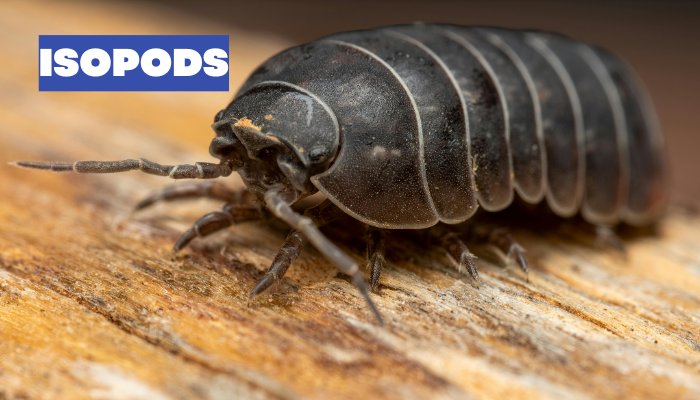
If you have ever flipped over a rock in your backyard and watched a small, grey, armored creature curl into a perfect ball, you have already met an isopod. Most people call them pill bugs, roly-polies, or woodlice without giving them much thought, perhaps brushing them aside as they move on. That would be a mistake. Isopods are among the most ecologically important, biologically diverse, and quietly remarkable animals on the planet, and the more you learn about them, the harder it becomes to look at them the same way again.
From garden soil to the deepest trenches of the ocean, from Antarctic waters to tropical forest floors, isopods have found a way to survive and thrive in virtually every environment on Earth. There are more than 10,000 described species, and researchers continue to discover new ones regularly. They have been around for hundreds of millions of years, they serve critical roles in multiple ecosystems, and they have recently become one of the most popular animals in the exotic pet hobby. To call them unremarkable would be to miss the point entirely.
What Exactly Is an Isopod?
The Word “isopod” comes from Greek roots meaning “equal foot,” a reference to the paired legs that run along the length of their body in roughly equal arrangement. Isopods belong to the order Isopoda, which sits within the class Malacostraca and the larger phylum Arthropoda. In other words, they are crustaceans, more closely related to crabs and shrimp than to insects, even though the ones you find on land often get mistaken for bugs.
Their body plan is immediately recognizable once you know what to look for. They are dorsoventrally flattened, meaning they are wider than they are tall, giving them a distinctive oval, segmented silhouette. Their exoskeleton is divided into overlapping plates that allow flexibility while still providing protection. Most terrestrial species have seven pairs of legs, and their antennae are typically quite prominent.
One of the defining features of isopods is that they breathe through structures called pleopods, which function somewhat like gills and are located on the underside of the abdomen. This is why terrestrial isopods need moisture to survive. Even the most land-adapted species cannot fully detach from damp environments, as their respiratory systems require humidity to function. Leave them in a dry environment for too long, and they will desiccate.
The Three Worlds of Isopods
Perhaps the most striking thing about isopods as a group is the sheer range of environments they inhabit. Broadly speaking, they can be divided into three major ecological categories, though plenty of species blur those lines.
Terrestrial Isopods: The Garden Residents
The species most people are familiar with are the terrestrial isopods, the pill bugs and woodlice that live in leaf litter, under rocks and logs, in compost heaps, and in the damp corners of gardens and forests. The most commonly encountered genera include Armadillidium, Porcellio, and Oniscus.
Armadillidium vulgare, the common pill bug, is perhaps the most globally recognized species. It is the one that rolls into a tight ball when threatened, a behavior called conglobation, which protects its softer underside from predators and physical damage. Not all isopods can do this. The Porcellio genus, which includes many popular hobby species, can only partially curl and is generally faster and more active.
Terrestrial isopods are detritivores, meaning they feed primarily on decaying organic matter. They break down dead leaves, rotting wood, fungi, and other decomposing material, releasing nutrients back into the soil. This makes them genuinely important to soil health and the broader cycling of organic matter in terrestrial ecosystems. Some research suggests they also contribute to the breakdown of heavy metals in contaminated soils, which has caught the attention of environmental scientists.
Marine Isopods: Life in the Ocean
Marine isopods are far less visible to most people but no less extraordinary. They inhabit every depth of the ocean, from shallow coastal waters to the hadal zone, the deepest parts of oceanic trenches where pressure is crushing, and light never reaches.
The giant isopod, Bathynomus giganteus, deserves special mention. Found in cold, deep waters of the Atlantic, Pacific, and Indian Oceans, this species can reach lengths of up to 50 centimeters, making it one of the largest crustaceans in the deep sea. It is a scavenger that feeds on dead fish, whales, and other organic material that sinks to the ocean floor. When food is scarce, it can survive for extraordinarily long periods without eating, with some individuals in captivity recorded going more than four years between meals.
The giant isopod became something of an internet sensation in recent years, appearing in viral posts that sparked a wave of fascination among people who had never given much thought to deep-sea life. Their otherworldly appearance, equal parts alien and armadillo, made them immediately memorable and helped spark broader public interest in deep-sea biodiversity.
Parasitic Isopods: The Darker Side
Not all isopods are harmless decomposers or fascinating deep-sea giants. Some have evolved into parasites, and their life cycles are genuinely unsettling in the most compelling way.
The family Gnathiidae includes species that parasitize fish in their larval stages, attaching to the gills or body and feeding on blood before dropping off to molt and develop. More dramatically, the family Cymothoidae contains species that are ectoparasites of fish as adults, and one genus, Cymothoa, has become famous for a behavior sometimes described as “tongue-eating.”
Cymothoa exigua, the tongue-eating louse, enters a fish through the gills as a juvenile, attaches to the tongue, and feeds on blood until the tongue eventually atrophies. The isopod then takes up permanent residence in the fish’s mouth, functionally replacing the tongue and continuing to feed on the fish’s mucus. The fish survives this, which is remarkable, and the isopod lives out its life in a uniquely cozy arrangement. It is deeply strange, a little horrifying, and a perfect illustration of how evolution produces solutions that no designer would ever anticipate.
Why Isopods Have Become Popular Pets
Over the past decade, isopods have gone from garden curiosities to coveted terrarium inhabitants, traded by hobbyists around the world and sold for prices that would surprise most people. A single rare morph of Armadillidium maculatum, the dalmatian isopod, can sell for several dollars per individual. Sought-after species like Cubaris murina or certain color morphs of Porcellio scaber regularly fetch significant prices in the exotic invertebrate market.
The appeal is easy to understand once you spend time with them. Isopods are low-maintenance, clean, and genuinely interesting to observe. They work constantly, processing organic material, rearranging their environment, and interacting with each other in subtle ways. They reproduce readily under the right conditions, making them rewarding for breeders. And they come in a stunning range of colors, patterns, and sizes, from the pearl-white Armadillidium maculatum to the vivid orange of Porcellio hoffmannseggi.
In the terrarium hobby specifically, isopods serve a dual purpose. They are kept both as display animals in their own right and as “cleanup crew” members in bioactive enclosures, which function as self-sustaining mini-ecosystems. In a bioactive terrarium housing a reptile or amphibian, isopods break down waste, prevent mold, aerate the substrate, and contribute to a living, breathing environment that stays cleaner and healthier than a conventional setup.
Setting Up an Isopod Culture
For anyone interested in keeping isopods, the basics are approachable. Most species thrive in a plastic container with a tight-fitting lid, a substrate of coconut fiber or a mix of coconut fiber and organic topsoil, and a layer of leaf litter on top. Cork bark, dried wood, and chunks of sphagnum moss give them places to hide and surfaces to graze.
Moisture is one of the most important variables to manage. Most species prefer a moisture gradient, meaning one side of the enclosure should be kept damp while the other stays drier. This allows the animals to regulate their hydration by moving between zones.
Feeding is straightforward. Dried leaves, particularly oak, magnolia, and silver maple, are a staple food that also improves substrate structure. Supplemental foods like dried mushrooms, fish flake, cuttlebone (for calcium), and small pieces of fresh fruit and vegetables round out the diet. Cuttlebone is particularly important because a calcium-rich diet supports healthy exoskeleton development and successful molting.
The Biology of Molting and Reproduction
Like all arthropods, isopods shed their exoskeleton periodically to grow, a process called molting or ecdysis. What makes isopod molting unusual is that it happens in two stages. The back half of the body is shed first, followed by the front half a few days later. This staged molting reduces the vulnerability window and ensures the animal is never completely without protection at any given moment.
Reproduction in isopods is similarly interesting. Most species are sexually dimorphic, with males often being slightly smaller than females and identifiable by modified appendages called pleopods. After mating, the female carries fertilized eggs in a special chamber called the marsupium, essentially a brood pouch located on her underside. The eggs develop there, and the young, called mancae, emerge as fully formed miniature versions of the adults. There is no larval stage in the way you might expect from other crustaceans.
Some isopod populations harbor a bacterial parasite called Wolbachia, which can manipulate host reproduction in various ways, sometimes feminizing genetic males to increase its transmission rate. This has made certain isopod species useful model organisms in the study of reproductive manipulation and host-parasite co-evolution.
Isopods in Science and Research
Beyond their ecological roles and hobbyist appeal, isopods have made significant contributions to scientific understanding across several fields.
Their sensitivity to environmental conditions makes them useful bioindicators. Scientists monitor isopod populations to assess soil health, pollution levels, and the ecological recovery of disturbed habitats. Changes in population density or species composition can signal shifts in ecosystem quality that may not yet be apparent in other metrics.
In ecotoxicology, terrestrial isopods are widely used in standardized tests to assess the toxicity of soil contaminants. Their predictable behavior and reproductive biology make them convenient test subjects for measuring how pollutants like heavy metals, pesticides, and industrial chemicals affect invertebrate life.
The deep-sea species, particularly the giant isopods, are of increasing interest to researchers studying extremophile biology, deep-sea food web dynamics, and the physiology of fasting. Understanding how Bathynomus survives years without food could have implications for research into metabolic suppression and resource conservation in extreme environments.
Conservation and the Bigger Picture
While many isopod species are abundant and under no particular threat, some, especially those with restricted ranges or highly specific habitat requirements, face pressure from habitat loss, pollution, and climate change.
Cave-dwelling isopods, many of which have evolved in complete isolation over millions of years, are particularly vulnerable. These species often occupy a single cave system or aquifer and have no capacity to disperse or adapt to rapidly changing conditions. Several cave isopod species are already listed as threatened or endangered, quietly disappearing before most people even knew they existed.
The broader lesson applies across the natural world. The animals that rarely make headlines are often the ones doing the quiet, unglamorous work that keeps ecosystems running. Isopods decompose organic matter, move nutrients through the soil, feed larger predators, and maintain the invisible architecture of healthy habitats. Losing them, even the small, overlooked terrestrial ones under your garden rocks, would matter more than most people realize.



Advent: The Season of Light, Hope, and Quiet Anticipation

Pravi Celer: The True Celery Transforming Modern Nutrition

Burt Thicke: The Name, the Myth, and the Real Family Story
-

 Fashion9 years ago
These ’90s fashion trends are making a comeback in 2017
-
Entertainment9 years ago
The final 6 ‘Game of Thrones’ episodes might feel like a full season
-
Fashion9 years ago
According to Dior Couture, this taboo fashion accessory is back
-
Entertainment9 years ago
The old and New Edition cast comes together to perform
-
Sports9 years ago
Phillies’ Aaron Altherr makes mind-boggling barehanded play
-
Business9 years ago
Uber and Lyft are finally available in all of New York State
-
Entertainment9 years ago
Disney’s live-action Aladdin finally finds its stars
-
Sports9 years ago
Steph Curry finally got the contract he deserves from the Warriors