
Food
Chateaubriand: The Cut, The Writer, and The Legacy

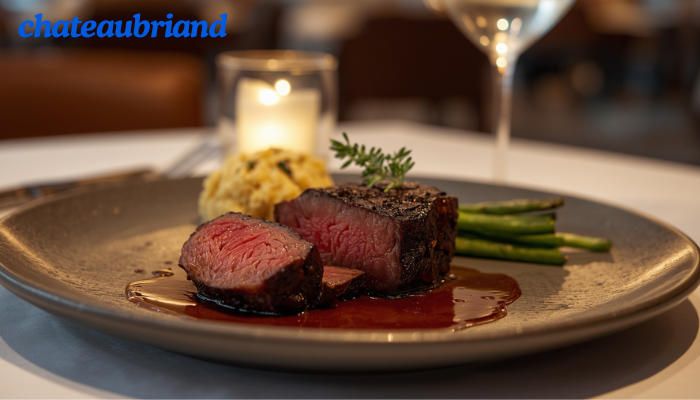
There are very few words in the culinary and literary world that carry quite as much weight as “Chateaubriand.” Say it in a fine dining restaurant, and a server will bring you one of the most prized cuts of beef on the menu. Say it in a French literature class, and the conversation shifts entirely, moving toward poetry, exile, Catholic faith, and the birth of Romanticism. The name belongs to both worlds with complete authority, which is part of what makes it so fascinating.
Whether you are a food lover trying to understand what makes this particular cut so special or a curious reader wanting to know more about the man behind the name, this guide covers it all. By the end, you will have a much clearer picture of why Chateaubriand, in every sense of the Word, continues to matter.
Who was François-René de Chateaubriand?
Born in Saint-Malo, Brittany, on September 4, 1768, François-René de Chateaubriand was a French writer, politician, diplomat, and historian who became one of the towering figures of the Romantic movement. He grew up in a noble family and spent much of his early childhood near the sea, a setting that left a permanent mark on his imagination and his prose.
He traveled to North America in 1791, spending time among Indigenous peoples and exploring landscapes that were entirely foreign to European readers at the time. Those experiences fed directly into his writing, giving his work a vividness and emotional depth that set him apart from contemporaries.
When the French Revolution erupted, Chateaubriand found himself navigating enormous personal and political upheaval. He fought briefly with the royalist armies, was wounded, and eventually fled to England, where he spent years in poverty but continued writing. Exile sharpened his thinking, and the longing for home, for beauty, and for spiritual meaning became recurring themes throughout his career.
His return to France and his subsequent works made him a literary celebrity. He served in various diplomatic roles, became a peer of France, and was never far from the center of political life. But it is his writing, not his politics, that secured his place in history.
Chateaubriand’s Literary Legacy
Atala and the Birth of French Romanticism
Published in 1801, “Atala” was a short novel set in the American wilderness that tells the story of two young lovers caught between passion, faith, and fate. The book was a sensation. Readers who had grown tired of cold Enlightenment rationalism responded to its lush descriptions of nature, its emotional intensity, and its tragic beauty.
“Atala” is widely considered one of the founding texts of French Romanticism. Chateaubriand did not simply describe nature as background scenery. He gave it emotional resonance, making the landscape reflect the inner lives of his characters in ways that would influence writers for generations.
The Genius of Christianity
A year after “Atala,” he published “Le Genie du Christianisme” (The Genius of Christianity), a sweeping defense of the Catholic faith. France had just emerged from a period of intense anti-clerical violence during the Revolution, and Chateaubriand argued that Christianity was not just spiritually true but aesthetically profound, the source of much of Europe’s greatest art, music, and literature.
Napoleon Bonaparte, who had just signed the Concordat reestablishing relations between France and the papacy, reportedly approved of the book. It resonated with a public eager to reconnect with tradition after years of chaos. Today, it is read as a landmark of religious and cultural writing.
Memoirs from Beyond the Grave
His most personal and perhaps greatest work is “Mémoires d’outre-tombe” (Mémoires from Beyond the Grave), a massive autobiography that he worked on for most of his adult life and instructed to be published only after his death. It is a book of extraordinary range, moving from childhood memories in Brittany to reflections on Napoleon, revolution, love affairs, and the march of time.
What makes the Memoirs so remarkable is the quality of the prose. Chateaubriand wrote French like no one before him, with a musicality and pictorial richness that raised the literary bar considerably. Victor Hugo, who was born the year after “Atala” was published, later said that he wanted to be Chateaubriand or nothing at all.
What Is the Chateaubriand Steak?
Now for the other kind of Chateaubriand, the one you can eat.
The Chateaubriand is a thick cut taken from the center of the beef tenderloin, specifically from the thickest part of the fillet. It is sometimes called the “heart of the tenderloin.” Because the tenderloin is a muscle that does very little work, it produces meat that is exceptionally lean, incredibly tender, and mild in flavor compared to cuts like ribeye or striploin.
A classic Chateaubriand is typically cut to serve two people, though some restaurants and home cooks prepare individual portions. Its thickness, usually around two inches or more, means it benefits from high-heat searing on the outside and a gentler finish in the oven to achieve the ideal internal temperature.
How Did the Steak Get Its Name?
The most widely accepted story is that Chateaubriand’s personal chef, a man named Montmireil, created the preparation for the writer sometime in the early nineteenth century. The dish was designed to impress, combining the finest cut of beef with a sauce made from a white wine and shallot reduction, finished with butter and herbs.
Some food historians have pushed back on this origin story, noting that the connection between the dish and the diplomat-writer is not perfectly documented. But the association stuck, and the name Chateaubriand became a byword for luxurious, special-occasion beef cookery.
How to Cook Chateaubriand Properly
Cooking a Chateaubriand well requires a bit of patience and the right technique. Here is the general approach used by most professional kitchens.
Start by bringing the meat to room temperature, which takes about thirty to forty-five minutes out of the refrigerator. Pat it completely dry with paper towels, then season generously with salt and freshly ground black pepper on all sides.
Heat a heavy oven-safe skillet, ideally cast iron, until it is very hot. Add a neutral oil with a high smoke point, then sear the tenderloin on all sides until a deep, golden-brown crust forms. This should take about two to three minutes per side.
Transfer the skillet to an oven preheated to around 400 degrees Fahrenheit (200 degrees Celsius) and roast until the internal temperature reaches your target. For medium-rare, the most commonly recommended doneness for this cut, aim for about 130 degrees Fahrenheit (54 degrees Celsius). Let the meat rest for at least ten minutes before slicing. Resting is not optional. It allows the juices to redistribute and keeps the meat from losing moisture the moment you cut into it.
The Classic Chateaubriand Sauce
The traditional accompaniment is a sauce Bearnaise or, in some preparations, a reduction sometimes called sauce Chateaubriand, made with white wine, tarragon, shallots, and butter. The richness of the sauce complements the tenderloin’s leanness beautifully. Simple roasted or sauteed vegetables are the preferred side, keeping the focus firmly on the beef.
Chateaubriand in Fine Dining Culture
The Chateaubriand steak has become synonymous with celebration and luxury. It appears regularly on special occasion menus, anniversary dinners, and holiday feasts. Part of its appeal is theatrical: a large, thick roast brought to the table and sliced tableside carries a sense of occasion that few other dishes can match.
In the steakhouse world, the quality of a Chateaubriand is often used as a benchmark for the kitchen’s skill and sourcing. A properly cooked Chateaubriand requires good beef, good technique, and a clear understanding of temperature and timing. There is nowhere to hide.
The Connection Between the Two Meanings
It is worth pausing on why a steak and a writer share a name, and what that says about the culture that produced both.
Chateaubriand, the man, lived and worked in a world where food, language, and social status were deeply intertwined. The French aristocracy and intellectual class dined well, hosted lavishly, and associated great cooking with great civilization. The idea that a celebrated chef would name a dish after a celebrated patron was not unusual; it was a form of tribute, a way of linking the pleasures of the table to the prestige of letters.
That the cut in question was the finest, most elegant portion of the tenderloin made the association feel natural. Something is fitting about the most refined cut of beef being named for one of the most refined writers of his era.
Why Chateaubriand Still Matters
Chateaubriand, the writer, is not as widely read today as he once was, at least outside France. But his influence runs through much of what we recognize as modern literature. His insistence on emotional authenticity, his rehabilitation of religious sentiment as an aesthetic category, and his treatment of nature as a mirror of human feeling are all ideas that became central to Romantic and post-Romantic writing.
In France, he is a canonical figure taught in schools and studied seriously by scholars. His prose style is considered a model of classical French writing, even as his themes were anything but conservative. He was a man of contradictions: a royalist who admired Napoleon’s energy, a devout Catholic with complicated love affairs, a defender of tradition who helped create something genuinely new in French literature.
Chateaubriand, the steak, meanwhile, is not going anywhere. As long as there are restaurants that value quality ingredients and classic technique, the tenderloin will be carved, rested, and served to people marking the moments of their lives that deserve something special.



Isopods: The Fascinating World of Nature’s Tiny Cleaners

Chateaubriand: The Cut, The Writer, and The Legacy

Supermarket: How It Shapes the Way We Shop and Eat
-

 Fashion9 years ago
These ’90s fashion trends are making a comeback in 2017
-
Entertainment9 years ago
The final 6 ‘Game of Thrones’ episodes might feel like a full season
-
Fashion9 years ago
According to Dior Couture, this taboo fashion accessory is back
-
Entertainment9 years ago
The old and New Edition cast comes together to perform
-
Sports9 years ago
Phillies’ Aaron Altherr makes mind-boggling barehanded play
-
Business9 years ago
Uber and Lyft are finally available in all of New York State
-
Entertainment9 years ago
Disney’s live-action Aladdin finally finds its stars
-
Sports9 years ago
Steph Curry finally got the contract he deserves from the Warriors