
News
Jablje: Slovenia’s Renaissance Jewel With Roots in Apple Trees

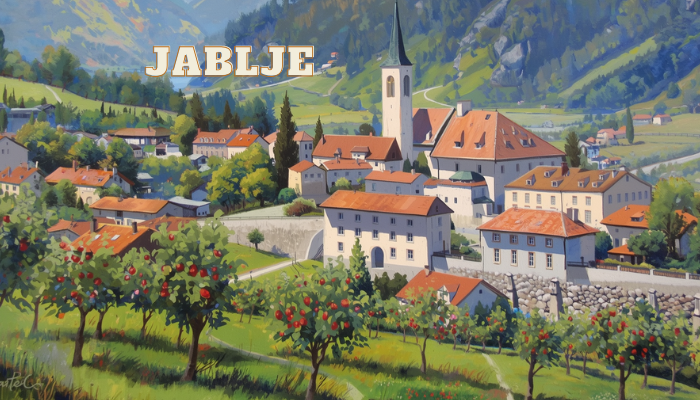
Discover Jablje, Slovenia’s historic Renaissance castle, its Baroque frescoes, its cultural role during the EU presidency, and the orchard roots behind its ancient name.
There are places in the world that announce themselves loudly, their fame preceding them by miles. Then there are places like Jablje, where the significance quietly deepens the closer you look. Tucked into the western edge of the Mengeš Plain in central Slovenia, Jablje is a name that carries centuries of history inside just three syllables. It is a village, a castle, a linguistic puzzle, and a cultural landmark, all wrapped into one. If you have ever wanted to understand Slovenia beyond its most famous postcard views, Jablje is a very good place to start.
What Does Jablje Actually Mean?
Before talking about stone walls and Renaissance courtyards, it is worth pausing on the name itself, because the name is a story in its own right.
Linguists have debated the origins of “Jablje” for quite some time. Older scholarly theories held that the Word derived from the German “Habach,” a name the site bore in medieval German-language records. The castle appears in early German documents as Hagbach and Hagwach in the 1320s, later evolving to Hawach and eventually Habach by the 15th century. The German form referred to a small creek overgrown with bushes. Some researchers tried to link the Slovenian “Jablje” back to that German root via the Word “Habicht,” meaning northern goshawk, a bird of prey reportedly common in the area.
More recent linguistic scholarship, however, rejects that theory entirely. The current understanding is that the Slovenian name arose independently, rooted in the Word “jabel,” meaning “apple tree.” The earlier Slovenian form was simply “Jable,” which over time shifted through a process of hypercorrection to the modern “Jablje.” This interpretation fits the landscape beautifully. The Mengeš Plain and its surroundings have long been associated with cultivated orchards and fertile agricultural land. Naming a settlement after the fruit trees that defined it was entirely natural for a culture that drew its identity from the rhythms of rural life.
There is something quietly profound about this. Jablje is not named after a battle or a conqueror. It is named after apple trees, the ordinary, edible, rooted kind. That origin gives the place a warmth that many historic sites simply do not have, a sense that real people shaped this land not only through violence, but also through seasons of planting and harvesting.
The Castle That Defines the Place
Of course, when most people search for Jablje today, they are looking for the castle. Jablje Castle, also written as Grad Jablje or Jable Castle, is the landmark that puts this small locality on the map of Slovenian heritage sites. And it deserves every bit of attention it receives.
The site has an extraordinarily long recorded history. The first written mention of Jablje dates to 1268, placing it firmly in the medieval period. However, the structure visitors see today is largely a product of the 16th century. Around 1530, the noble Lamberg family rebuilt the castle in the Renaissance style, giving it the distinctive architectural personality it carries to this day. The Lamberg family left their mark literally on the building, most notably through a Renaissance portal on the southern facade that once displayed the family coat of arms.
The castle’s design is a layered conversation between different eras. Its bones are late Gothic, its defining character is Renaissance, and many of its decorative details are thoroughly Baroque. It is a four-wing structure, partly sub-cellared, rising two stories with a semi-attic above. Two polygonal towers punctuate the southern side, adding a sense of weight and drama to the silhouette. The arcaded Renaissance courtyard, constructed in the early 17th century, is one of the building’s most graceful features, the kind of architectural element that encourages you to slow down and simply look.
Windows across the ground floor still preserve late Gothic frames, a reminder of what came before the Lambergs arrived. The upper floors show Baroque styling. Walking through the castle, you are essentially walking through five or six centuries of European architectural history compressed into a single building.
The Frescoes That Stop People in Their Tracks
If there is one interior feature of Jablje Castle that visitors consistently remember, it is the Baroque frescoes by painter Franc Jelovšek. Jelovšek was a significant figure in Baroque art in the Slovenian and Central European context, and the frescoes he created at Jablje demonstrate exactly why.
The paintings are opulent, vivid, and full of life. Their coloring and compositional ambition speak to the sophisticated tastes of the aristocratic families who commissioned them. But the detail that truly catches people off guard is a scene of a Chinese figure riding a camel while playing a tambourine. This striking image, unusual in the context of a Slovenian country estate, reflects the broader European fascination with the Orient that characterized the Baroque period. It is a reminder that Jablje, even in its quiet corner of the Mengeš Plain, was connected to the wider currents of European culture and trade.
These frescoes are widely regarded as among the greatest artistic assets of the entire castle estate and are worthwhile for anyone interested in Baroque painting or the region’s cultural history.
A Bronze Sword from the Edge of History
The castle grounds held another surprise, this one entirely unplanned. In 2004, a bronze sword was accidentally discovered in the water basin at Jablje Castle. Archaeologists quickly recognized its significance. The sword is considered one of the three oldest full-handle swords found in the eastern Alps and ranks among the oldest in Europe as a whole, alongside swords originating from the Carpathian region.
That a single accidental discovery could connect this Renaissance manor to the Bronze Age speaks to the extraordinary depth of human settlement in this corner of Slovenia. The landscape around Jablje has been lived in, worked, and fought over for far longer than its medieval written records suggest. The bronze sword is now a tangible link to communities that stood in this same valley thousands of years before the Lamberg family ever laid a foundation stone.
A Parade of Noble Owners
After the Lambergs established the castle in its current form, Jablje passed through several aristocratic hands over the following centuries. The Rasp family succeeded the Lambergs, followed by the barons Mosconi, who simultaneously held Pišece Castle and were clearly among the more prominent landowners of their time. From 1780 until the end of World War II, the castle was owned by the barons Lichtenberg.
The Lichtenberg period ended abruptly and not gently. After the war, the castle was nationalized and then, unfortunately, looted. For a time, it served as apartments, a rather unglamorous fate for a building of this grandeur. It later became an experimental facility of the Biotechnical Faculty at the University of Ljubljana, which at least gave it some form of active use. During this institutional phase, wallpaper from the interior was removed and deposited in the National Museum of Slovenia for safekeeping, a decision that preserved at least part of its decorative heritage.
Many of the outbuildings, barns, woodsheds, and ancillary structures did not survive these turbulent decades. A chestnut avenue that once connected the castle to the nearby town of Loka pri Mengšu is gone. A cast-iron pergola covered in wisteria that adorned the main pathway has vanished. A fishpond, stone park walls, and sections of the formal garden are also lost. What remains includes the stables and a toplar, a traditional wooden drying rack typical of the Dolenjska region, preserved in the lower part of the former estate.
Restoration and a New Role on the World Stage
The modern story of Jablje Castle is one of careful revival. Between 1999 and 2006, the castle underwent thorough renovation. The work restored both its structural integrity and much of its visual character. What followed that renovation was remarkable.
In 2008, Slovenia held the rotating presidency of the European Union. Jablje Castle served as a significant protocolary venue during that presidency, hosting official meetings and events that brought European dignitaries to this quiet valley above Loka pri Mengšu. For a building that had spent decades as apartments and a research facility, hosting the diplomatic machinery of the European Union was a considerable rehabilitation of its prestige.
Today, the castle is home to the Centre for European Perspective, or CEP, known in Slovenian as the Center za evropsko prihodnost. This organization uses the castle for conferences, cultural events, diplomatic meetings, and educational initiatives focused on European integration and international cooperation. It is a genuinely fitting use for a building that has itself been shaped by centuries of cross-cultural contact and change.
The castle is open to individual visitors every other Saturday at 11 in the morning, and group visits can be arranged in advance through the Centre. It is one of those heritage sites where turning up without planning might leave you disappointed, so checking ahead before your visit is always the right move.
Jablje in Its Landscape
Part of what makes Jablje so appealing is the setting it inhabits. The castle sits at the western edge of the Mengeš Plain, where the terrain shifts between open agricultural land and forested hills. The location offers genuine visual contrast: the structured, cultivated feel of the plain against the wilder character of the surrounding woods.
The nearby town of Mengeš is worth exploring during any visit. It is a pleasant, historically layered small town that offers a gentler pace than Ljubljana, which sits only about 20 kilometers to the southwest. The proximity to the capital is one of Jablje’s practical advantages. You can easily visit from Ljubljana in a half-day and return refreshed by the contrast in atmosphere.
The surrounding landscape also carries an agricultural character that fits the apple-tree etymology of Jablje’s name rather well. Orchards and cultivated fields still define sections of the plain, and in the right season, the area feels fertile and generous in the way that rural Central Europe can feel when it is not trying to impress anyone.
Why Jablje Stays With You
There is a particular kind of travel experience that comes from discovering a place that is genuinely layered without being overwhelming. Jablje offers exactly that. It is not a site that shouts for your attention. It earns it gradually, through the depth of its history, the beauty of its architecture, the strangeness of a Baroque camel rider on a Slovenian castle wall, and the quiet pleasure of knowing that beneath the Renaissance stonework lies a Bronze Age sword, and beneath the formal name lies the memory of apple trees.
Whether you are drawn by Baroque art, Renaissance architecture, Slovenian cultural heritage, or simply the desire to find something beyond the obvious tourist trail, Jablje rewards the curious traveler. It is a place where language, landscape, and history converge on a small patch of the Mengeš Plain and produce something genuinely worth knowing.
If Slovenia is already on your travel list, let Jablje be the detail that adds depth to the picture. And if Slovenia is not yet on your list, well, a Renaissance castle named after apple trees, decorated with Baroque frescoes of a camel-riding musician, and home to one of Europe’s oldest bronze swords might be exactly the kind of reason to start planning


The Name That Launched a Thousand Searches
Type “Burt Thicke” into any search engine and you will find something interesting: dozens of results, a tangle of biographical claims, and a genuine mystery at the center of it all. Some articles describe a Canadian stockbroker and devoted family patriarch. Others hint at a viral internet meme. A few tell you directly that the name itself is something of a puzzle.
The truth is more layered and, as it turns out, far more interesting than a simple biography. The story of Burt Thicke is really three stories woven together: the origins of one of Canada’s most beloved entertainment families, the fascinating life of Alan Thicke, and a piece of internet culture that took on a life of its own. Understanding each thread separately makes the whole picture considerably clearer.
Who Is Burt Thicke, Really?
Let’s start with the most important clarification. “Burt Thicke” does not refer to a single, well-documented public figure. The name has circulated widely online, most often in discussions about Alan Thicke and his son, Robin Thicke. Still, it creates a degree of confusion that responsible writing needs to address directly.
Alan Thicke’s biological father was William Jeffrey, a Canadian stockbroker who lived in Kirkland Lake, Ontario, in the mid-twentieth century. His actual surname was Jeffrey, not Thicke. When Alan’s parents divorced in 1953, Alan was just six years old. His mother, Joan, later remarried a physician, Dr. Brian Thicke, and young Alan took his stepfather’s surname. That is how the famous “Thicke” name entered entertainment history.
The nickname “Burt” attached to William Jeffrey has spread widely across celebrity genealogy blogs and informal biography sites, but it lacks any verified documentary source. It appears to have moved organically from one low-authority page to the next, each one citing the last, until the name felt established. This is a textbook example of how internet misinformation travels: not through malice, but through repetition.
A separate meaning of “Burt Thicke” emerged in mid-2025 as a viral internet meme. The name blends Burt Reynolds and Alan Thicke into a single, humorous fictional identity, representing a creative “what if” scenario in which Reynolds replaces Thicke as a sitcom father figure. That meme spread quickly because it was built on genuine nostalgia for two iconic entertainment personalities from different corners of classic American and Canadian television culture.
So when people search for Burt Thicke, they are typically looking for one of three things: information about Alan Thicke’s family background, the story of the Thicke family dynasty, or details about the internet phenomenon that merged two famous names into one fictional persona. This article covers all three.
Alan Thicke: The Man at the Center of It All
To understand why so many people are curious about the Thicke family roots, you need to appreciate just how significant Alan Thicke was in North American popular culture.
Alan Willis Thicke was born Alan Willis Jeffrey on March 1, 1947, in Kirkland Lake, Ontario, Canada. He grew up in a household shaped by Canadian values of hard work, community, and self-reliance. His maternal grandmother, according to family accounts, played piano accompaniment for silent films, an early hint that creative instincts ran through the family. After his mother married Dr. Brian Thicke and the family relocated to Elliot Lake, Ontario, young Alan thrived academically and socially. He was bright enough to skip two school grades and was elected homecoming king by his classmates. He later attended the University of Western Ontario, where he studied English and Psychology and began developing the communication skills and natural charisma that would define his career.
Before Growing Pains, Thicke hosted a short-lived U.S. syndicated late-night talk show called Thicke of the Night, one of the first serious efforts to challenge NBC’s Tonight Show. He was also an accomplished songwriter, having composed the themes to Diff’rent Strokes and The Facts of Life, as well as several game shows.
These were not minor achievements. Theme songs for hit television programs represent genuine artistic and commercial contributions to popular culture, and Alan’s ability to work across multiple disciplines, acting, writing, composing, and hosting, sets him apart from performers who excelled in only one area.
Growing Pains and a Nation’s Living Room
The role that made Alan Thicke a household name across North America arrived in 1985 with the ABC sitcom Growing Pains.
It was that sitcom, which ran for seven seasons from 1985 to 1992, that made him a household name in the United States. He played psychiatrist Dr. Jason Seaver, who starts working from home and raising the children after his wife returns to work.
The premise was quietly progressive for its time. A father as the primary at-home parent, adapting his professional life around his family’s needs, was not the standard television father archetype of the 1980s. Alan brought genuine warmth, dry wit, and a kind of understated authority to the role, making Jason Seaver one of the most genuinely likable television fathers of his generation.
The show attracted serious talent. Leonardo DiCaprio had an early role as a homeless youngster taken in by the Seavers on Growing Pains. DiCaprio later said that Thicke “knew how to harness the power of the entertainment industry to be a positive influence in so many lives” and described him as someone who, when he walked into a room, was quite frankly the coolest person there.
Alan himself was characteristically modest about the character he built over seven seasons. He described Jason Seaver as a blend of his own values and the talented writing staff, noting that he brought what he called his “good old Canadian, northern Ontario backwoods values” to the character.
A Career That Refused to Stand Still
What set Alan Thicke apart from many actors associated with a single iconic role was his relentless creative output over decades. After Growing Pains concluded in 1992, he continued working steadily in television, film, and live entertainment, never disappearing from public view for long.
Thicke remained a consistent presence on TV in recent years with guest appearances on NBC’s This Is Us and Netflix’s Fuller House. He also starred on the Pop reality series Unusually Thicke, which focused on his personal life.
His self-deprecating humor and genuine approachability made him a favorite guest on talk shows and a reliable presence at charitable events, award ceremonies, and industry functions. He once referred to himself as “the affordable Shatner,” a joke that captured his awareness of his own place in the cultural landscape with exactly the kind of warm humor that made audiences love him.
His composing work also continued to earn recognition. The theme songs he had written in the late 1970s remained beloved pieces of television nostalgia, recognizable to generations of viewers who had grown up watching those programs.
Robin Thicke: The Legacy Continues
The Thicke family’s creative thread extended powerfully into the next generation.
Robin Alan Thicke was born on March 10, 1977. His parents are American actress-singer Gloria Loring and Canadian actor Alan Thicke. They divorced when Robin was seven years old.
Robin Thicke is best known for his 2013 single “Blurred Lines,” featuring T.I. and Pharrell Williams, which peaked at No. 1 on the Billboard Hot 100, received diamond certification from the RIAA, and remains one of the best-selling singles of all time.
Robin’s path into the music industry was shaped significantly by his father’s influence and example. Alan helped his son structure his earliest songs and, while initially cautious about the entertainment business given his own experience of its unpredictability, became one of Robin’s most vocal supporters as his son’s talent became undeniable.
Before pursuing his recording career, Robin produced and wrote songs for R&B singer Brian McKnight, who led the then-unknown singer to do the same for other R&B acts, including Brandy Norwood, Color Me Badd, Brownstone, and others. At the age of 16, he signed with Interscope Records.
The range of accomplishment across three generations of this family, from the structured financial discipline of William Jeffrey in Kirkland Lake, through Alan’s decades of television and composition, to Robin’s global chart success, represents a genuinely remarkable story of creative legacy.
The Viral Meme: Burt Reynolds Meets Alan Thicke
No complete discussion of “Burt Thicke” in 2025 and 2026 is possible without addressing the internet phenomenon that brought the name to a new generation of searchers.
The Burt Thicke meme began gaining traction in mid-2025, fueled by a growing interest in nostalgic content and creative fan edits. A viral Instagram post played a key role in introducing the concept to a wider audience, presenting Burt Thicke as a real television character, using familiar visual elements from classic sitcoms.
The concept works because it draws on two very distinct archetypes from classic entertainment. Burt Reynolds represented bold, swaggering, action-oriented masculinity, complete with his famous mustache and an easy confidence that made him one of Hollywood’s biggest stars through the late 1970s and 1980s. Alan Thicke, by contrast, embodied warm, thoughtful, domesticated fatherhood, the psychiatrist dad who listened carefully, offered measured advice, and kept the family together through gentle humor.
Combining those two personalities into a single fictional character is inherently funny because the contrast is so vivid. Imagining Burt Reynolds delivering Jason Seaver’s patient, psychologically informed parenting advice is an immediately legible comedic premise that requires almost no explanation.
The rapid rise of Burt Thicke can be explained by its strong connection to nostalgia and humor. The meme taps into memories of classic television while offering a fresh, unexpected twist. Its simplicity and clarity allow users to understand the concept within seconds, which is essential for viral content.
Alan Thicke’s Final Chapter
The end of Alan Thicke’s story was as characteristically warm and genuine as the life he had led.
He suffered a heart attack while playing hockey with his son, Carter. His older son, Robin Thicke, told the Los Angeles Times that some of his last words were a compliment to his son on a good shot.
He died on December 13, 2016, at the age of 69. He had been tweeting about Fuller House earlier that same day, cheerful and engaged with his work and his audience right up until the end.
Robin Thicke called his father “the greatest man I ever met” and “always a gentleman.” Carter Thicke tweeted that he had “lost my best friend and my idol.”
The tributes that poured in from across the entertainment industry painted a consistent portrait. Colleagues and co-stars described someone who was unfailingly kind, professionally reliable, and genuinely present with the people around him. That combination of personal decency and professional excellence is rarer than it should be, and the grief expressed at his passing reflected how much it was valued.
Why the Thicke Family Story Endures
The internet’s ongoing fascination with “Burt Thicke,” despite the name’s murky origins, speaks to something genuine about the family it represents.
People are drawn to stories of creative legacy, of values passed across generations and expressed differently in each one. William Jeffrey, the stockbroker from Kirkland Lake whose son took a different name and built a television career, provided a foundation of stability and discipline. Alan Thicke took that foundation and built something extraordinary on it, then supported his own son’s creativity with the same blend of practical caution and genuine encouragement.
Robin Thicke’s global success is the visible peak of that generational tower, but the stories below it matter. The grandmother who played piano for silent films. The small Ontario mining town where Alan grew up, understanding, perseverance, and the value of being genuinely likable.
Entertainment dynasties do not emerge from nowhere. They grow from households where certain values are modeled, and certain freedoms are permitted, where discipline and creativity are treated not as opposites but as partners.
That is the story behind the name “Burt Thicke,” regardless of the confusion that surrounds it.

What Was YIFY and Why Did It Matter?
If you spent any time on the internet between 2011 and 2015, you likely encountered a name that became almost synonymous with free movie downloads: YIFY. For millions of film enthusiasts around the world, it was not just a website or a torrent release group. It was a cultural phenomenon, a technical marvel, and for the global entertainment industry, a serious problem.
YIFY, which later became known as YTS (short for YTS.ag or YTS.mx in its reincarnated forms), built a reputation that no other piracy group had quite managed before. Its secret weapon was elegant in its simplicity: beautifully compressed, high-definition movies delivered at file sizes so small that even users with slow internet connections could download a 1080p film in a matter of hours, sometimes minutes.
Understanding YIFY means understanding a particular moment in internet history, when streaming was still young, digital ownership felt clunky, and a generation of moviegoers wanted access to cinema on their own terms.
The Man Behind the Brand: Who Was YIFY?
The operation was the brainchild of a New Zealander named Yiftach Swery, a computer science student who went by the handle “YIFY,” a name derived from his own first name. He launched the project around 2010 and 2011, initially as a personal experiment in video compression. What started as a technical hobby quickly snowballed into something far larger than he ever anticipated.
Swery possessed a sharp eye for what movie fans actually wanted. At a time when most pirated films were either low-quality camera recordings or enormous, multi-gigabyte files that required a fast broadband connection and substantial hard drive space, he found a middle ground. Using encoding techniques built on the x264 codec, he compressed full-length feature films into files ranging from 700MB to 1.5GB without noticeable visual degradation for the average viewer.
It sounds like a minor technical achievement, but its impact was enormous. Suddenly, a two-hour Hollywood blockbuster could be downloaded in the same time it took to order a pizza.
The Science of Small: How YIFY Compressed Movies
To appreciate what made YIFY distinctive, it helps to understand a little about video encoding. Most HD video files are large because they carry an enormous amount of visual data: millions of pixels refreshed dozens of times per second. Reducing that file size without ruining the image requires sophisticated algorithms that decide which visual details the human eye will actually notice and which it will not.
YIFY mastered a particular configuration of the x264 encoder, tuning settings that most encoders ignored or left at default values. He carefully reduced bitrates, focusing compression on scenes with complex motion while preserving clarity in dialogue-heavy moments. The result was a file that looked genuinely impressive on a laptop screen or even a mid-sized television, despite being a fraction of the size of other HD releases.
This approach was not without tradeoffs. Trained eyes and home theater enthusiasts noticed reduced detail in dark scenes, softer textures, and occasional artifacts during fast-paced action sequences. But for casual viewers who wanted to watch a movie on a Friday night without waiting days for a download, it was close to perfect.
A Library That Rivaled Netflix
At its peak, the YIFY website hosted an extraordinary catalog. Thousands of movies were available, organized cleanly, tagged with accurate genre information, and accompanied by the original IMDB ratings. The interface was user-friendly in a way that many legitimate streaming services struggled to match at the time.
Netflix in 2012 and 2013 still had a heavily restricted international library. Users outside the United States found that entire genres, classic films, and recent releases were simply unavailable in their regions. YIFY had no such borders. A film student in Pakistan, a cinephile in Brazil, and a teenager in rural Australia all had access to the same library, available at the same quality, at the same time.
That global accessibility was one of the most powerful arguments that YIFY’s fans made in its defense. The platform, whether intentionally or not, exposed a massive gap in the legitimate market. People did not want to pirate movies out of malice toward filmmakers. They wanted to watch films, and the legal options were either too expensive, too restricted, or simply unavailable.
Record-Breaking Torrents and Cultural Reach
Some of YIFY’s releases became the most downloaded torrents in internet history. Films like “The Wolf of Wall Street,” “Interstellar,” and “The Avengers” generated millions of downloads each, numbers that drew serious attention from Hollywood studios and rights holders worldwide.
The Motion Picture Association of America (MPAA) ranked YIFY among the most damaging piracy operations worldwide. This was not simply hyperbole from an industry eager to protect its revenue. The sheer volume of downloads, combined with the clarity and convenience of the releases, meant that YIFY had genuinely disrupted the traditional distribution model in ways that earlier piracy groups had only partially managed.
At its height, the website reportedly attracted around 100 million visitors per month. For reference, that placed it ahead of many major news websites and entertainment portals. It was not a fringe operation. It was a mainstream one.
The Legal Hammer Falls
In 2015, the MPAA and several major studios filed a lawsuit against Yiftach Swery and the YIFY operation. Rather than fight the case in court, Swery settled. The terms included shutting down the YIFY website, ceasing all release activity, and paying damages estimated in the millions of dollars.
Swery issued a statement that was notably candid and free of the defiant bravado common in the piracy world. He acknowledged that copyright holders had legitimate grievances and expressed some degree of remorse. He was, by all accounts, not a hardened criminal but a young man who had built something that spiraled far beyond his original intentions.
The original YIFY operation went dark. But the story did not end there.
The YTS Reincarnation
Almost immediately after the YIFY shutdown, a new site appeared under the name YTS, carrying the same aesthetic, the same compression style, and an enormous catalog of films encoded in the YIFY tradition. The new operation was run by different individuals, leveraging YIFY’s brand recognition established over years of dominance.
The YTS brand has continued to operate in various forms across shifting domains, including YTS.ag, YTS.mx, and others. Copyright enforcement has pushed it from server to server and country to country, yet it has consistently reappeared. The site still attracts tens of millions of monthly visitors and maintains a catalog of thousands of films, all encoded according to the specifications YIFY made famous.
Whether this constitutes a tribute or an exploitation of Swery’s original vision depends largely on who you ask. The operator of the current YTS sites is not the same person who built the original. But the format, the philosophy, and the audience are unmistakably YIFY’s children.
What YIFY Taught the Streaming Industry
The legacy of YIFY is not solely about copyright infringement and legal battles. It is also a story about what consumers actually want and how industries can fail to provide it.
In the years since YIFY peaked, the legitimate streaming landscape has transformed almost beyond recognition. Netflix expanded globally, investing billions in local-language content to serve the very markets that YIFY once dominated by default. Disney+ launched with a comprehensive library that addressed years of fragmented licensing deals. HBO Max, Amazon Prime Video, Apple TV Plus, and dozens of regional platforms have collectively built a streaming ecosystem that, while imperfect, offers far more than the legal market of 2012 ever did.
Small file sizes are no longer the barrier they once were. Broadband speeds have risen dramatically worldwide, and mobile data has become cheaper and more accessible in many developing nations. The technical problem that YIFY solved brilliantly has, in some ways, been made obsolete by infrastructure improvements and competitive pricing.
Yet piracy persists, and YIFY’s brand persists with it. That persistence speaks to something the industry has still not fully solved: pricing, content fragmentation, simultaneous global release windows, and regional licensing restrictions continue to drive users toward unauthorized alternatives.
The Ethical Debate That Never Really Ended
Discussions about YIFY have always carried a complicated moral dimension. On one side, filmmakers, distributors, and studios argue correctly that every download represents a lost potential sale and that sustained piracy undermines the financial foundation of the creative industry.
On the other hand, fans and digital rights advocates point to the demonstrable gap between what legal platforms offered and what audiences needed. They argue that piracy is not simply theft but a market signal: a loud, clear message that the industry’s distribution model was broken.
Both arguments contain genuine truth. The film industry does deserve to profit from its creative work. Audiences do deserve access to global cinema without punishing price structures or arbitrary geographic restrictions. The tension between those two valid claims is exactly what YIFY stepped into, and exactly what the streaming revolution has been trying to resolve ever since.
YIFY’s Place in Internet History
Looking back from 2026, YIFY occupies a unique and somewhat paradoxical position in the history of digital media. It was a piracy operation, built in violation of copyright law, that directly contributed to financial losses for rights holders. It was also a technical achievement, a user experience benchmark, and a catalyst for change in an industry that had resisted adapting to the digital age.
Yiftach Swery was not a folk hero in any uncomplicated sense. He broke the law, reached a settlement, and moved on from the project he created. But the conversation that YIFY started, about access, affordability, global distribution, and the purpose of intellectual property law in a connected world, continues today in academic papers, courtrooms, policy discussions, and the business strategies of every major streaming platform.
Viewers loved the movies YIFY shared online. That much is beyond dispute. Whether the method of distribution was justified is a question the world is still working through, one new streaming service, one new copyright lawsuit, and one new file format at a time.

Indonesia is home to more ocean than almost any country on Earth, yet even within that vast blue expanse, a few places manage to feel genuinely off the map. The Lucipara Islands are one of those places. Scattered across the Banda Sea roughly 200 kilometers south of Ambon, these small, largely uninhabited islands sit so far from the nearest city that most Indonesians have never heard of them. For the scientists, divers, and conservationists who have made the long journey south, however, Lucipara is not just a destination. It is a revelation.
This article takes a close look at the Lucipara Islands: where they are, what makes them so ecologically remarkable, what it actually takes to get there, and why they are now at the center of a serious conservation effort that could define their future for generations.
Where Exactly Are the Lucipara Islands?
The Lucipara Islands, also known as Lousapara, Lucapin, or Lusipari Islands, and officially known in Indonesian as Kepulauan Lucipara, are part of the Maluku province of eastern Indonesia. Geographically, they sit at approximately 5.49 degrees south latitude and 127.54 degrees east longitude, placing them well within the Banda Sea and roughly 50 kilometers west of the Penyu Islands. To their north lies the Manipa Strait, separating them from the larger island of Seram.
The island group consists of several small landmasses, with Bingkudu and Kadola among the most frequently visited. The total land area is modest, but the surrounding marine territory is anything but. These islands are positioned at the convergence of powerful ocean currents, a hydrological fact that drives extraordinary levels of marine productivity and biodiversity. (more…)


Advent: The Season of Light, Hope, and Quiet Anticipation

Pravi Celer: The True Celery Transforming Modern Nutrition

Burt Thicke: The Name, the Myth, and the Real Family Story
-

 Fashion9 years ago
These ’90s fashion trends are making a comeback in 2017
-
Entertainment9 years ago
The final 6 ‘Game of Thrones’ episodes might feel like a full season
-
Fashion9 years ago
According to Dior Couture, this taboo fashion accessory is back
-
Entertainment9 years ago
The old and New Edition cast comes together to perform
-
Sports9 years ago
Phillies’ Aaron Altherr makes mind-boggling barehanded play
-
Business9 years ago
Uber and Lyft are finally available in all of New York State
-
Entertainment9 years ago
Disney’s live-action Aladdin finally finds its stars
-
Sports9 years ago
Steph Curry finally got the contract he deserves from the Warriors